Thursday, January 8, 2015

On Stateline: States step in to protect pregnant workers' rights

http://bit.ly/1xKbKst

States Go Beyond Federal Law to Protect Pregnant Workers
  • January 07, 2015 
  • By Marsha Mercer
Pregnant womanAP
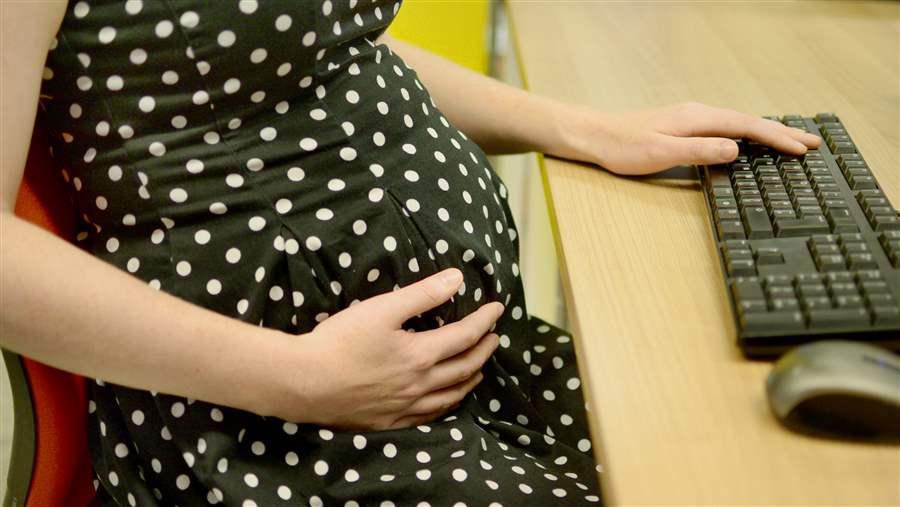
Many states are approving new protections for pregnant workers, requiring employers to give them more or longer bathroom breaks, rest periods, light duty, job transfers, leave time or other accommodations. (AP)
Decades after a federal law banned discrimination against pregnant women in the workplace, some states are providing additional protections to pregnant workers who want to stay on the job.
After Congress passed the Pregnancy Discrimination Act in 1978, many state legislators thought the problem had been solved. But as the number of women in the workforce has increased—and more of them have stayed on the job through their pregnancies—they have encountered obstacles not covered by the federal law.
Recent federal court rulings that have sided with employers who support a narrow interpretation of the law have added fuel to efforts in state capitals.
"Women should not have to choose between being a mother and having a job," outgoing Democratic Gov. Pat Quinn of Illinois said in August when he signed that state’s Pregnant Workers Fairness Act.
As of Jan. 1, employers in Illinois must provide pregnant workers who request them more or longer bathroom breaks, rest periods, light duty, job transfers, leave time or other accommodations, unless doing so creates an undue hardship for the employer.
"These are women who are healthy and want to continue working," said Democratic state Sen. Toi Hutchinson, a sponsor of the Illinois bill. "They’re not looking to get out of work. What they want is a temporary accommodation."
Eleven other states also have passed laws requiring employers to provide reasonable accommodations to pregnant workers. In 2014, laws took effect in Delaware, Minnesota, West Virginia and the District of Columbia. Since 2011, Alaska, Connecticut, Maryland and New Jersey also have approved laws.
California has had a pregnancy accommodation law since 1999, Louisiana since 1997 and Hawaii since 1990. Texas does not have a statewide law covering private employers, but since 2001 it has required county and municipal governments to make reasonable efforts to accommodate their pregnant employees. In addition, at least four cities have approved protections for pregnant workers in the public and private sectors: New York, Philadelphia, and Central Falls and Providence in Rhode Island.
Georgia, Massachusetts, New York, North Carolina, Pennsylvania, Rhode Island and Wisconsin are expected to debate statewide pregnancy protection bills this year.
"States have been a real model in embracing laws that require reasonable accommodation to pregnant workers," said Emily J. Martin, vice president of the National Women’s Law Center, a research and advocacy group.

Vital to Blue-Collar Workers

It’s illegal under the federal Pregnancy Discrimination Act to fire a worker, cut her pay or deny her health benefits because she is pregnant. But the law applies only to employers with 15 or more workers and is unclear on the extent to which employers must accommodate pregnant employees so they can continue to work. Pregnancy alone is not a disability under the federal Americans with Disabilities Act, although it does protect women with pregnancy-related impairments, such as difficulty bending or lifting heavy objects.
Courts have tended to rule narrowly on what employers must do to accommodate pregnant workers, and women’s rights advocates contend that many pregnant women are pushed out of their jobs.
Proponents say pregnancy accommodation laws are especially important to blue-collar and low-wage workers, who may need something simple—a stool at the cash register, additional bathroom breaks or light duty—to keep working.
When Lauri Huffman Wolfe of Saginaw, Michigan, became pregnant in November 2012, she asked for job modifications at the Speedway convenience store and gas station where she was a shift manager. Her doctor had advised her not to climb the 9-foot ladder to change the store sign, reach into the bottle bin or perform certain other tasks. Her employer attempted to put her on unpaid Family and Medical Leave, and she refused.
"I said, ‘I still have 22 weeks left in my pregnancy, and I need to work,’" she said. Speedway fired her for job abandonment. Michigan law does not expand pregnancy protections beyond federal law. She sued in federal court and has appealed a district court’s dismissal of her claim.
More than 250,000 women a year are denied their requests for pregnancy accommodation, according to a 2013 survey by Childbirth Connection, a project of the National Partnership for Women & Families. More than half the women surveyed said they did not request an accommodation because they feared retaliation.
Charges of pregnancy discrimination have risen substantially at the Equal Employment Opportunity Commission, which filed 5,342 charges in fiscal 2013, up from 3,900 in 1997. Under President Barack Obama, the EEOC has stepped up investigations and enforcement actions. In July, the commission issued guidance on pregnancy discrimination, but the guidance is not legally binding.
"Despite much progress, we continue to see a significant number of charges alleging pregnancy discrimination, and our investigations have revealed the persistence of overt pregnancy discrimination, as well as the emergence of more subtle discriminatory practices," EEOC Chairwoman Jacqueline Berrien said in statement last summer.

Bipartisan Support

In many states, new protections for pregnant workers have made allies of conservatives and liberals.
"As a conservative, pro-life Republican, I don’t want anyone choosing between a job and a child," said Delaware Del. Colin Bonini, who sponsored the bill that passed both houses of the legislature unanimously.
"From a fiscal-conservative standpoint, we don’t want people to lose their jobs and get on public assistance," he said. "We want women to work and to have successful pregnancies and successful families. This just made so much sense."
Bonini, who is running for governor in 2016, said he talked to some of the larger businesses in his state. "Nobody had any problem at all with this bill. Nothing from the Chamber (of Commerce). The only negative was a few far-fringe right, kooky emails."
In Illinois, however, some business groups remain concerned.
"We still think the law is going to create problems for employers," said Jay Shattuck, executive director of the Illinois Chamber of Commerce’s Employment Law Council. The council and several other business groups first opposed the Illinois measure, but later switched to a neutral stance because, according to Shattuck, opposing the state law was "like being against motherhood."
The Illinois law covers job applicants as well as employees, affects employers with one or more employees, and is vague on which conditions are covered, Shattuck said. He added that it may open the door to unpaid leave for those who don’t qualify under the federal Family and Medical Leave Act.
Additional protections for pregnant workers are less popular on Capitol Hill, where a new federal measure proposed by Democrats, the Pregnant Workers Fairness Act, has failed to garner any Republican support. GOP opponents contend the law would place an unfair burden on businesses.

Crucial Court Case

Meanwhile, the U.S. Supreme Court is currently considering Young v. United Parcel Service, Inc., a case that asks whether companies must provide pregnant workers lighter duty or other alternate assignments if they offer job modifications to other workers who are temporarily unable to do their regular jobs.
Peggy Young, an early morning UPS driver in Maryland, asked for a job modification when she became pregnant and her doctor advised her not to lift more than 20 pounds. UPS policy at the time did not provide light duty to pregnant workers, although it did allow employees who were injured on the job and drivers who lost their licenses to receive alternate assignments. UPS has since changed its policies to accommodate pregnant workers.
The court isn’t expected to issue its ruling until the summer, but the case has already spurred two states, Maryland and West Virginia, to pass their own measures. Legislators in both states said they were surprised at the limited scope of the federal law.
"The case showed there’s a hole" in coverage for pregnant workers, said West Virginia Del. Stephen Skinner, a Democrat. "So rather than wait around, we closed it in West Virginia."
The vote in the West Virginia House was unanimous; one Democratic state senator voted against it.

Misguided Efforts

State laws vary. Some are modeled on the proposed Pregnant Workers Fairness Act in Congress. In Illinois, the state American Civil Liberties Union’s Reproductive Rights Projectdrafted and lobbied for the legislation.
"The law says the employer can’t impose an accommodation a woman doesn’t want," said Lorie Chaiten, director of the Reproductive Rights Project. "They can’t say, `You need to go home.’"
The goal is to educate employers, she said, not take them to court. On that, employers agree.
"The last place you want to be as an employer is defending against pregnancy discrimination," said John Hyland, an employment law attorney in San Francisco. "You don’t want to be in court in California as an employer in a discrimination suit. You’re already presumed guilty."
Hyland said employers often face discrimination complaints as a result of misguided efforts to help or protect pregnant workers.
"I don’t think I’ve ever seen a pregnancy discrimination case rooted in an animus or dislike toward the pregnant woman," he said.

Tuesday, January 6, 2015

Let the sun shine in Supreme Court -- Jan. 8, 2015 column

By MARSHA MERCER

The Supreme Court is poised this year to make momentous rulings – on the future of the Affordable Care Act, pregnant workers’ rights on the job and, probably, same-sex marriage.  

If you want to see the court in action, though, you’ll have to be present – just as when everybody wrote with a quill pen. Speaking of which, white quills are still set out on counsel tables every day the Supreme Court is in session – a nice touch for the lawyers arguing cases.

But citizens of the 21st century shouldn’t have to journey to Washington to see justice.

After all, millions of Americans watch the Super Bowl without having to travel, Rep. Steve King, R-Iowa, said last month at a hearing of the House Judiciary subcommittee on courts. Most people watch the game on TV -- a technology that was cutting edge 60 years ago.

The hearing was on the proposed Sunshine in the Courtroom Act, a perennial, bipartisan effort to open the Supreme Court and lower federal courts to television cameras.

Republicans and Democrats in the House and Senate as well as C-SPAN and media and legal organizations have tried unsuccessfully for decades to persuade the Supreme Court to televise its proceedings.

C-SPAN, which began covering the House of Representatives in 1979 and the Senate in 1986, first made a request to cover oral arguments to Chief Justice William Rehnquist in 1988.

Chief Justice John G. Roberts Jr. dashed hopes that the court might relent in 2015 in his year-end report on the federal judiciary, released on New Year’s Eve. He didn’t mention cameras, but he did stress that the court shouldn’t embrace technology too quickly.

“The courts will often choose to be late to the harvest of American ingenuity,” he wrote. His goal is to make legal briefs and other filings available online “as soon as 2016.”

Roberts’ report prompted criticism from the incoming chairman of the Senate Judiciary Committee.

“The courts have yet to embrace the one technology that the founders likely would have advocated for – cameras in the courtroom,” Sen. Chuck Grassley, R-Iowa, a longtime proponent of televising court proceedings, said in a statement.

“The founders intended for trials to be held in front of all people who wished to attend. The First Amendment supports the notion that court proceedings be open to the public and, by extension, the news media and broadcast coverage, the same way CSPAN opened Congress to the public,” Grassley said.

Every state allows TV coverage of courts, and some federal courts do too. The Supreme Court releases written transcripts and audio recordings of oral arguments, sometimes the same day.  

Independent organizations, including SCOTUSblog, blog arguments and opinions live as they happen. The court allows sketch artists. But cameras? No way.   

Justice David Souter quipped in 1996 that cameras would roll into the courtroom over his dead body.  Souter has since retired. Justice Anthony Kennedy has said the court should not become part of the “national entertainment network.” Justice Clarence Thomas has said his colleagues on the court would lose their privacy.

Justices fear that the public wouldn’t understand the court’s arcane proceedings, that lawyers might grandstand and that soundbites would wind up out of context on the news and late-night TV. 

A lot of that already happens. Ordinary citizens, kept at arms’ length, have to rely on pundits who offer flamboyant interpretations. If people could see the action for themselves, they would get a more measured view.

Interestingly, nominees to the court often approve of cameras but as justices favor keeping the door shut. For example, Elena Kagan said in her confirmation hearing in 2010 that she thought cameras in the courtroom would be “terrific.”

“I think it would be a great thing for the institution, and more important, I think it would be a great thing for the American people,” she said.  A couple of years later, though, Justice Kagan had cooled to the idea, saying she had “a few worries” about cameras.

Even if Congress were to pass the Sunshine in the Courtroom Act, you still might not be able to watch the Supreme Court from your den.  The act authorizes the chief justice and judges in lower courts to allow cameras but it doesn’t require them to do so. The court could still say no.

For the foreseeable future, if you want to see the court, you’ll need to saddle up for the trip to Washington – and that’s unjust.    

© 2015 Marsha Mercer. All rights reserved.
30

Monday, December 29, 2014

New year's resolutions 'r' us -- Dec. 30, 2014 column

By MARSHA MERCER

There’s one – and only one -- foolproof way to avoid the disappointment of breaking your New Year’s resolutions: Don’t make any.

Let me quickly say that I do not subscribe to this strategy of avoidance, although many people do.

I’m a serial resolution maker. I love the freedom of the fresh start. The clarity of the clean slate. The blue sky of the blank page. I may not achieve my goal, but then again, I may. What have I to lose by trying?

As the lottery people say, you can’t win if you don’t play.

The first month of the year is the great equalizer. Each of us can erase the old and have 12 months to paint our new life. OK, we also have 12 months to fail, as if it takes that long. We usually fall off the road of good intentions in a couple of weeks.

But this time could be…will be!…different. And off we ride into the clutter-free land of health, wealth and size 4.

Forty-four percent of Americans said they planned to make New Year’s resolutions for 2015, a Marist Poll reported last month. That’s about the same as a year ago, but a jump from 2004. A decade ago, only 35 percent planned to make a resolution. The poll didn’t explore why people changed.  

Fifty-nine percent of people said they kept their resolutions in 2014 – which sounds high. But it compares with the 72 percent who said they’d kept theirs a year earlier. Really? Could we be seeing a wee bit of selective memory at work? 

The great 18th century essayist and biographer Samuel Johnson said second marriages are the triumph of hope over experience. The same can be said of New Year’s resolutions. We know all too well what happened before, but…that was then.

Social scientists at the University of Pennsylvania’s Wharton School say that certain time landmarks, such as birthdays and holidays, “create discontinuities in time perceptions that make people feel disconnected from their past imperfections…and disrupt people’s focus on day-to-day minutiae, thereby promoting a big-picture view of life.”

And that encourages people to engage in “aspirational behavior,” write Hengchen Dai, Katherine L. Milkman and Jason Riis in their paper on “The Fresh Start Effect,” published online in June in the journal Management Science.

I don’t know about all that, but I do know that January gives me a sense of possibilities that isn’t there most months, although back-to-school September always calls me to a new beginning.

In any case, younger people are more likely to make resolutions than oldsters. Among those under 45, more than half said they were very likely or somewhat likely to make a resolution for 2015. For those 45 and older, only about one in three said they were likely or somewhat likely to do so.  

Interestingly, men and women are almost equally likely to make resolutions – 43 and 44 percent, respectively -- but men are slightly more likely to keep them. Or so they say.  

So let’s say you make a resolution. Some behaviorists who study how people keep resolutions suggest that it’s better to think small -- resolve to lose five pounds, not 50. Write down specific goals. Tell people. Keep track. Other experts, though, say it’s best to keep your resolutions vague. Don’t monitor yourself too closely or you might get discouraged.   

In light of such contradictory advice, you could consult your Uncle Sam. Seriously.   

The website www.usa.gov has a page on Popular New Year’s Resolutions. At the top of the list is Lose Weight, Americans’ No. 1 goal. There’s also Manage Stress, Save Money, Get Fit, Drink Less Alcohol and eight others. Each of the 13 topics links to other government sites for free help.

For example, click on Quit Smoking and you go to smokefree.gov, where you can choose to write a quit plan, call a live counselor and sign up for supportive text messages and free apps.

“It doesn’t matter where you start. Just start,” smokefree.gov says in big, bold letters.

That’s not bad advice. Just start.

Happy New Year! And good luck.

© 2014 Marsha Mercer. All rights reserved.

Tuesday, December 23, 2014

What's your grade for 2014? -- Dec. 23, 2014 column

By MARSHA MERCER

To hear President Barack Obama, 2014 has been a heckuva year.

“Pick any metric you want: America’s resurgence is real,” the president declared at his year-end news conference.

In case you missed it: Over the last 57 months, businesses have created nearly 11 million new jobs, most of them full-time. Wages are rising. America is the world’s largest producer of natural gas. Gas is 70 cents a gallon lower than last Christmas. Ten million Americans have gained health insurance this year, the president said.

“Meanwhile, around the world, America is leading,” he said. We lead the coalition to destroy ISIL, the international fight to check Russian aggression in the Ukraine, the global fight against Ebola in West Africa and efforts to combat climate change. Our combat mission in Afghanistan is nearly over, he said, thanking the troops and their families.

“There is no doubt that we can enter into the New Year with renewed confidence that America is making significant strides where it counts,” Obama said.

Sounds good, but when I asked a few people to grade 2014, they looked pained.

One said “fast,” as in the year flew by. Others reluctantly gave the year a C or just shrugged. I agree that 2014 deserves a C – not the worst of years, certainly not the best – but we may be easy graders.

Several polls this month have found between 64 and 69 percent of Americans still think the country is heading in the wrong direction. Seven in 10 people say the next president should govern differently than Obama, putting Obama in George W. Bush territory near the end of Bush’s second term, the Wall Street Journal reported.

Presidential historian Robert Dallek likens what has happened to Obama to what befell President Lyndon B. Johnson in the mid-1960s.

LBJ won the 1964 presidential election by one of the largest landslides in history and pushed landmark, controversial measures through Congress, including Medicare and Medicaid, civil rights and voting rights laws. Obama won decisively in 2008 and pushed through the Affordable Care Act.

“This is not to suggest that history is repeating itself. There are too many differences between Johnson and Obama — both the men and their presidencies — to argue that,” Dallek wrote in an online essay for Reuters in October. “Yet, as Mark Twain said, history may not repeat itself, but it does rhyme.”

After both presidents achieved progressive change, they lost public support. The war in Vietnam ruined LBJ’s credibility and stopped his domestic agenda. Obama has been blocked by a combination of foreign and domestic developments. His popularity has tanked.

But historians may view Obama differently than people do today, says Dallek, one of the historians who have had several dinners with the president.

“It is doubtful that Obama will end up with as poor a reputation as Johnson,” the historian writes. A recent ranking of public approval of the last 10 presidents placed Johnson third from the bottom, above only Richard M. Nixon and George W. Bush.

“Historians will likely credit the Obama administration with more advances toward a more humane society,” says Dallek, citing the Affordable Care Act, equal rights for women, equal treatment for gays and lesbians and sympathetic treatment for “Dreamers,” children brought illegally to the United States by their parents.

As Obama thinks about his place in history, he is signaling that he hasn’t given up on the present. His December surprise announcement to start normalizing relations with Cuba shows he wants to remain relevant. 

He acknowledges there is plenty of work left to do and says he’s energized and excited about what he calls his presidency’s fourth quarter. He also claims he wants to work with Republicans.

But as the GOP takes control of Congress with what they believe is a mandate to roll back Obama’s policies, the president is staking out a confrontational game plan.

“I intend to continue to do what I’ve been doing,” Obama said of his use of executive actions, which many in the GOP consider unconstitutional.

Partisan battles, standoffs, vetoes and more disappointment surely lie ahead. By this time next year, 2015 may be lucky to get a C.   


© 2014 Marsha Mercer. All rights reserved.

Wednesday, December 17, 2014

Wanted: Candidates who tell us to eat our spinach -- Dec. 18, 2014 column

By MARSHA MERCER

As we dive into the 2016 presidential race, it’s worth remembering a low point in the 2012 contest -- so that maybe, just maybe, we won’t repeat it.

Cast your mind back to August 2011, when eight candidates for the Republican presidential nomination were in a debate in Ames, Iowa. A moderator asked for a show of hands: Who would walk away from a deal that cut $10 from the deficit for every $1 in tax increases?

All eight candidates raised their hands – and the crowd of GOP activists erupted in cheers and shouts of approval.  

We can agree that the way the question was asked, with a quick show of hands, hardly invites serious discussion. And, yes, primaries and caucuses bring out true-believers from party wings. General election voters are more moderate. Still, it was a defining moment: Revenues would be off the table -- again.

Former Utah Gov. Jon Huntsman later said he regretted going along with the pack but not doing so would have required a lot of explaining.

“What was going through my mind was, `Don’t I just want to get through this?’” Huntsman said. “That has caused me a lot of heartburn.”

Democrats as well as Republicans want to “get through this” without tackling the tough fiscal issues. But thoughtful people in both parties believe meaningful deficit reduction must include a combination of spending cuts and revenue increases. We keep putting off the hard conversations needed to find the right mix.    

Conventional wisdom says that nobody gets elected telling voters to eat their spinach. Successful candidates promise pie with meringue a mile high. Obviously, it’s more inspiring to talk about creating jobs, improving education and promoting cutting-edge technology than about slicing entitlements and raising the retirement age.

And yet, many voters do want what’s best for America. They would listen to a presidential contender who has the courage and skill to explain why it’s time for spinach.

Two veteran political pros are urging us to ask more of our presidential candidates this time around.

Retired U.S. Sens. John C. Danforth, Republican of Missouri, and J. Robert Kerrey, Democrat of Nebraska, have a message for the presidential candidates of 2016: “Don’t duck the debt.”

The debt is the cumulative amount the nation owes, and it continues to rise. This is happening even though the deficit, the difference between what the government takes in and spends in a year, has been declining since the end of the Great Recession.

Kerrey and Danforth co-chaired the 1994 Bipartisan Commission on Entitlement and Tax Reform, in which 30 of 32 commission members agreed then that “current trends are not sustainable” and urged policy changes. These included raising national savings, preventing entitlements from consuming ever more of the federal budget, dealing with projected increases in health care costs, and balancing spending and revenues for Medicare and Social Security. 

The New York Times headline about that 1994 report read, “Yawns greet a warning about the burning fuse on entitlements.”

Some things have changed for the better in the last 20 years, Kerrey and Danforth agreed Tuesday as they released an update at a forum sponsored by the Bipartisan Policy Council and Concord Coalition in Washington. We spend less than projected on interest on the debt; health care costs have declined. Overall, though, the trend still is not sustainable, they said. The burning fuse is shorter.

The burden of debt has risen from about half the gross domestic product in 1994 to three-fourths, and is still growing. We tip-toe around the big problems – health care costs and entitlements. Our aging population taps Social Security and Medicare more each year, taking money we could invest in domestic and international priorities to make us stronger as a nation.

To the presidential candidates in 2016, whoever they are, Kerrey and Danforth say: “Your campaign promises for reviving the economy, strengthening national defense, improving the social safety net or reducing the tax burden will ring hollow if they count on an escalating and unsustainable infusion of borrowed money.”

Like it or not, the next president will have to focus on fiscal issues. Voters should ask candidates for their solutions to the nation’s fiscal mess, and candidates should be straight with the people.

Let us eat spinach.  

© 2014 Marsha Mercer. All rights reserved.
30

.  

Thursday, December 11, 2014

Here we go again: Wealthy to get even louder voice -- Dec. 11, 2014 column

By MARSHA MERCER

Americans have a hate-hate relationship with money in politics.

We hate the corrupting influence of lobbyists and big money, but most of us also hate to open our own wallets to campaigns and political parties. We take a dim view as well of public or taxpayer funding of campaigns.   

Some wish for a constitutional amendment, which is about as likely as a magic wand, to make the money in politics disappear. Instead, we cede influence to a sliver of the population that does contribute to political campaigns and committees.

Only 0.2 percent of Americans gave $200 or more in the 2014 election cycle and only 0.04 percent gave more than $2,600, according to the Center for Responsive Politics, a nonpartisan group that tracks money in politics.

“In other words, current rules limiting how much an individual can give to party committees haven’t been a pressing problem for most Americans,” the center says on its opensecrets.org website.

But the fortunate few who do feel restrained by current limits have an ally in Sen. Mitch McConnell, R-Ky. The incoming majority leader negotiated a provision in the $1.1 trillion federal spending bill (on page 1,599 of 1,603 pages) to raise the limits on contributions by wealthy people to national party committees.

In effect, the provision guts what’s left of McCain-Feingold, the bipartisan 2002 law that prohibited large contributions by the wealthy and corporations to national party committees and required disclosure of those contributions. Donors soon found that the law allowed individuals and corporations to contribute “soft” money that didn’t have to be reported to outside groups.

This year, the maximum someone can give either the Democratic National Committee or Republican National Committee is $32,400. Under the new scenario, the political committees could set up three new separate accounts with separate contribution limits. Estimates vary on how much people then could give.  

In a letter to senators, six campaign finance watchdog groups said a single individual could contribute $777,600 per year or $1,555,200 per two-year election cycle. A couple could give $3,110,400 per two-year cycle, said the letter signed by Common Cause, the League of Women Voters, Public Citizen and three other groups.

“There is absolutely no justification for allowing these massive contributions that can only be given by millionaires and billionaires and are bound to result in corruption and national scandals,” the letter said. 

So where did the bail-out for the parties come from?

“This provision was worked out in a bipartisan way to allow those of us who are organizing political conventions to raise the money from private sources as opposed to using taxpayer funds,” House Speaker John Boehner told reporters.

It’s not the first time Congress has cut public funding of campaigns. In April, President Barack Obama signed bipartisan legislation to eliminate taxpayer funding for national political conventions and redirect the money to childhood disease research at the National Institutes of Health.

Former Rep. Eric Cantor, R-Va., championed the measure, which was named the Gabriella Miller Kids First Research Act in remembrance of a 10-year-old girl in Leesburg, Va., who died of brain cancer.

Taxpayers have been paying part of the conventions’ costs since 1976. In 2012, taxpayers gave each party about $18 million for the events, a pittance of the total bill, most of which was paid by corporate and individual donors.

We are witnessing the last gasp of the campaign finance reform era that was born after the Watergate scandal in the mid-1970s. Although the Supreme Court has watered down laws seeking to limit contributions, the people never embraced the laws either.

Congress approved a $1 checkoff  ($2 for a married couple) to help pay for presidential campaigns. Later tripled to $3 and $6, the checkoff never caught on. At its most popular, 29 percent of taxpayers used it, in 1980. By 2012, only 6 percent did.   

Since 1976, about $1.5 billion has gone to publicly financed candidates and nominating conventions, according to the Congressional Research Service. But presidential candidates have chosen to opt out rather than abide by the limits that accompany public funds. 

In 2012, Obama became the first president elected without accepting public funds.

We tend to act only in the wake of scandals, so it may take the next Watergate to wake us up to the need for campaign finance reform. Until then, the people with deep pockets will dig even deeper, and reap the rewards.   

© 2014 Marsha Mercer. All rights reserved.

30

Thursday, December 4, 2014

New racial reality is transforming America -- Dec. 4, 2014 column

By MARSHA MERCER

The current clash between congressional Republicans and President Barack Obama, while crucial for millions of undocumented immigrants, is also political theater aimed at shoring up Democratic and Republican constituencies.  

But the political debate misses the point. Powerful demographic forces that will transform the country are already in place.    

Regardless of how the latest episode of “Washington on the Brink” ends, sometime between 2040 and 2050 whites will no longer be in the majority in the United States.  That’s a monumental change from 1790 to 1980, when whites made up 80 to 90 percent of the population.

Minorities will have as profound an impact on American society in the 21st Century as baby boomers did in the 20th Century, says demographer William H. Frey, a senior fellow at the Brookings Institution in Washington. He looks at the inevitable demographic changes and challenges in his new book, “Diversity Explosion: How New Racial Demographics Are Remaking America.”

It’s not future waves of immigrants who will change the country’s racial makeup, Frey says. Most of the immigration that will shape our future occurred in the 1980s and 1990s.

The shift to a “majority-minority” population will result from births to people who are already here – mostly Hispanics and Asians – and to multiracial births, says Frey, who expects the ranks of Hispanics, Asians and the multiracial population to more than double in the next 40 years.

The country reached a milestone in 2011 when more minority babies than white babies were born. In Texas, New Mexico and California minorities are now in the majority.  Hawaii has never had a white majority, and whites are a minority in the District of Columbia.

This year for the first time, there are more minority students in U.S. elementary and high schools than whites. Multiracial marriages are also proliferating.  About one in seven new marriages is multiracial, including nearly half of those involving Hispanics or Asians.

Racial change has never been easy and older whites may fear losing their majority status, Frey says. But he believes that the shift to a majority-minority population will come “just in time,” as the country copes with a dwindling white population.

Because of low levels of white immigration, reduced fertility and aging, the white population grew a tepid 1.2 percent from 2000 to 2010, Frey says. In 2010, the median age of whites was 42, Asians 35, blacks 32 and Hispanics 27.

“Rather than being feared, America’s new diversity – poised to reinvigorate the country at a time when other developed nations are facing advanced aging and population loss – can be celebrated,” he writes.  

The solvency of Social Security and other retirement programs depends on younger workers’ energizing the economy. Our culture and politics will also change with the influx of new minority voters.

Minorities – defined as everyone but single-race, non-Hispanic whites -- now make up about 37 percent of the population. The Census Bureau projects minorities will be 57 percent in 2060.  

Latinos are the nation’s largest minority group and growing fast. Their political clout has yet to be felt nationally.

More than 25 million Hispanics are eligible voters – that is, citizens over 18 – up from 17.3 million in 2006, the Pew Research Center reports. A larger share are native-born than are naturalized citizens.

Hispanics are moving into areas of the country that previously had few Spanish speakers. Since 2006, the number of Hispanic eligible voters has grown fastest in South Carolina, up 126.2 percent, Tennessee, up 113.7 percent and Alabama, up 110.5 percent, according to Pew.

So far, minorities have overwhelmingly voted Democratic for president. In 2012, Hispanics voted for Obama over Republican Mitt Romney 71 percent to 27 percent. But Hispanics haven’t turned out to vote in rates as high as blacks or whites. 

In 2012, Latinos were 17 percent of the population but 11 percent of eligible voters due to lower median age and lower rates of citizenship and voter registration, Frey’s analysis found.

By 2024, one in three eligible voters will be nonwhite. That’s also the first year Latinos are projected to surpass the share of eligible black voters.

We can see the future – and it looks nothing like the 1950s or even 1980. How we adjust to the new reality will determine our success or failure.

© 2014 Marsha Mercer. All rights reserved.