Thursday, December 8, 2016

Out with Obamacare, in with . . . Trumpcare -- Dec. 8, 2016 column

By MARSHA MERCER

You’d think they’d be ready by now.

For nearly seven years, congressional Republicans have promised to “repeal and replace” Obamacare with something better and more affordable.

Repeal is easy. Since President Barack Obama got the Affordable Care Act through Congress in 2010 without a single Republican vote, the House has voted more than 60 times to repeal all or part of it.

On the campaign trail, Donald Trump called the law “a total disaster” and vowed to repeal and replace it on Day One.  

Senate Majority Leader Mitch McConnell said Tuesday repeal will be the first item of business in the New Year when the Senate returns Jan. 3.

Replace is hard. Republicans have yet to agree on a path forward for what inevitably will be known as Trumpcare. 

Even Trump now wants to keep two popular provisions of the health law. After he met with Obama in the Oval Office, the president-elect said he favors allowing children under 26 to stay on their parents’ health insurance plans and requiring coverage of people with existing medical conditions.

Trump’s a big-picture guy, so replacement details will fall to Congress, where, until the election, many were more interested in politics than policy. I know you’re surprised.

Only on Dec. 2 did House Majority Leader Kevin McCarthy send a letter to governors and state insurance commissioners asking for their ideas about health care reform.That way, if Trumpcare goes bad, state officials can share the blame.

McCarthy said the two-step repeal and replace process could take much of next year and beyond. House Speaker Paul Ryan also lowered expectations of speedy action.

“Clearly there will be a transition and a bridge so that no one is left out in the cold, so that no one is worse off,” Ryan said Monday in an interview with Craig Gilbert of the Milwaukee Journal Sentinel.

Ryan would not hazard a guess about how long the transition might take.

“It will clearly take time. It took them about six years to stand up Obamacare. It’s not going to be replaced come next football season,” he said.

One possibility is for Republicans to resurrect the repeal bill Obama vetoed last January. It called for a two-year delay in the effective date of replacement. Some Republicans say six months is enough.

Republican leaders invited Democrats to work with them, even though Republicans refused to cooperate with Obama. Senate Democratic leader Chuck Schumer derided Republicans as “the dog who caught the bus,” saying, “They don’t know what to do.”
Repeal without replacement will cause “huge calamity from one end of America to the other,” Schumer said. “Bring it on.”

In a letter to Trump, the American Hospital Association and the Federation of American Hospitals urged him and Congress not repeal Obamacare without a replacement. If that happens, Congress should restore funding to hospitals that was cut by Obamacare, the groups said, so hospitals can defray some of their costs.

The nonpartisan but left-leaning Urban Institute warned in an analysis this week that repeal without a clear replacement could throw into chaos the private health insurance market. Millions of Americans buy insurance directly rather than through an employer.

The number of uninsured could rise to 59 million by 2019, the study said. That’s far more than the 41 million who lacked insurance in 2014 when major provisions of Obamacare went into effect. About 28.5 million remained uninsured last year, according to the Kaiser Family Foundation.

Trump’s pick to lead Health and Human Services, House Budget Chairman Tom Price, wants to replace Obamacare with modest tax credits pegged to age, not income, to help people buy insurance on the private market.

Price’s proposed Empower Patients First Act also calls for grants to help states create “high-risk” insurance pools and expands health savings accounts.  

Republicans have not rushed to embrace the plan. Critics say it’s woefully underfunded and millions of Americans would lose coverage.

Taking time is not necessarily bad. Rushing could be worse.

But if members of Congress are going to blow up Obama’s signature legislation, they should be held to their promises and do no harm to the more than 20 million people who have insurance because of Obamacare.

To do anything less is to risk disappointing and disillusioning more Americans at a time when trust in government and politicians is badly frayed.  

©2016 Marsha Mercer. All rights reserved.

30

Monday, December 5, 2016

On Stateline, online news service of Pew Charitable Trusts -- Dec. 5, 2016

http://www.pewtrusts.org/en/research-and-analysis/blogs/stateline/2016/12/05/locked-up-for-the-holidays

Locked Up for the Holidays

  • December 05, 2016
  •  
  • By Marsha Mercer
Juvenile Detention Center
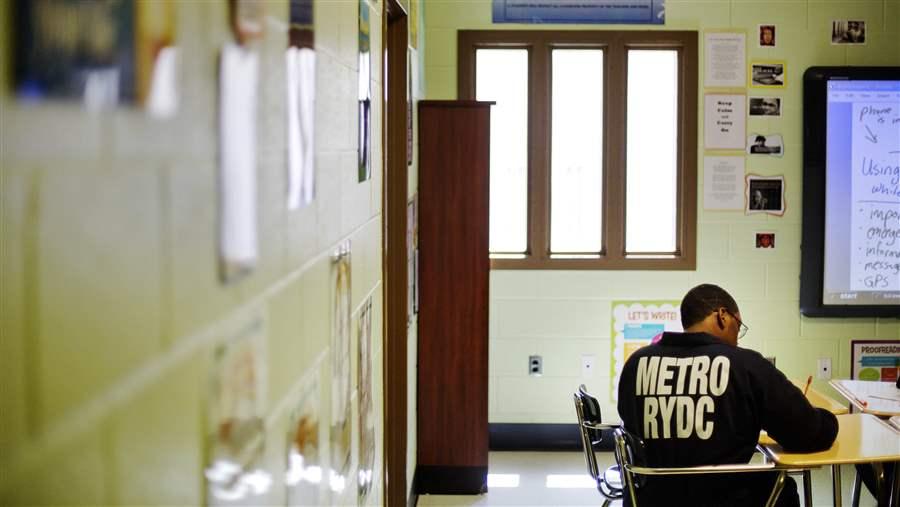
A juvenile resident sits in a classroom at a detention center in Atlanta. In many places, juvenile justice officials or nonprofits provide small gifts or holiday meals to young offenders who spend the holidays in custody.
© The Associated Press
The “most wonderful time of the year” may be the hardest for tens of thousands of young people locked up for the holidays.
But many states try — within the confines of security rules, budgets and protocols — to make the season a little brighter for youthful offenders, who often are housed far from home.
As it has every year since 1937, the Oklahoma Santa Claus Commission will spread cheer with presents. Each of the 400 offenders in the state’s residential detention facilities and group homes will receive a Kelly green duffle bag, a holiday stocking with candy and stationery, body wash (Dove for girls and Axe for boys), and a $9 gift card.
Staff will also distribute holiday cards, and the facilities will throw holiday parties.
“These are children who made a mistake,” said Tierney Tinnin, chair of the commission and deputy communications director of the state Office of Juvenile Affairs. “They’re working through the program to understand why they made a mistake. For us to provide a sense of normalcy in the holiday season helps put them on the path to right decisions, so they will be a great asset to the community when they come out.”
Many youthful offenders have a parent in prison, while others were raised by grandparents who physically aren’t able to make the trip or can’t afford to, Tinnin said.
The gift-giving in Oklahoma and other states fits with a broader trend in juvenile justice: replacing the adult-style prison model with a more positive culture in state facilities.
Research has shown that incarceration of lower-risk teens leads to higher recidivism rates, so incarceration is increasingly seen as a last resort. The number of youths held in residential facilities around the country has dropped by more than half, from 108,800 in 2000 to 50,800 in 2014, according to one-day counts by the federal Office of Juvenile Justice and Delinquency Prevention.
“The more we try to normalize these kids, the better the outcome,” said James Bueche, deputy secretary of the Louisiana Office of Juvenile Justice, which will distribute holiday gift bags to about 235 incarcerated youths, ages 13 to 20. “If you treat them as less than human, that’s the way they’re going to be.”

Shackles and Handcuffs

Around the country, state, local and private detention and residential centers, as well as faith and local support groups, provide small gifts or holiday meals to juveniles who spend the holidays in custody. What makes Oklahoma’s gift program different is that it’s required by law and funded by the state. 
The state budget dedicates $10,000 a year to the Santa commission, which also collects private donations. The commission had about $75,000 in its account going into the holiday season.
“I have never been able to find anybody who does it like we do,” said Paula Christiansen, a nine-year veteran public information officer at the Oklahoma juvenile affairs agency.
In Maryland, youths can earn a pass for good behavior to go home to celebrate Christmas. Last year, when the family of a girl who’d earned a pass could not come pick her up, a Department of Juvenile Services staff member drove her home.
But first, two staff members, one wearing a Santa hat, put the girl into shackles and handcuffs that were fastened to a belly chain with a black box, and attached a GPS monitor to her ankle, according to the state Juvenile Justice Monitoring Unit 2015 annual report, which includes photos of the preparations.
Some residential facilities put up holiday trees and let the juveniles make decorations and toys to use as gifts. Others have religious services and serve holiday meals.
“I think the facilities around the country do a really good job of trying to create a supportive atmosphere,” said Wayne Bear, CEO of the National Partnership for Juvenile Services. “But it’s not home.”
“As you can imagine, these are kids who typically have not experienced the family traditions other kids have on holidays and birthdays,” said Bear, who is also executive director of the Juvenile Detention Centers and Alternative Programs in Pennsylvania.

Funding for Presents

No general or taxpayer funds are used in Louisiana’s program. The money to pay for the gift bags — with pajamas, body wash, candy and chips — comes from fees collected from movies that were made in state facilities and youth canteens in the detention centers, he said.
The gifts are “not anything extravagant,” Bueche said, adding that the state correctional system does not usually issue pajamas, and the kids like special soap.
“They get excited about getting the gift bags,” he said.
In Oklahoma, the price tag for each gift will be about $30, and with related holiday expenses the fund will pay out about $15,000 in all, Tinnin of the Santa commission said. The duffle bags cost $12 apiece, she said.
The state polled the managers of the facilities to find out what the teens wanted. When released from custody, the young people usually leave for home straight from court, and they carry their possessions in a trash bag, she said. The duffle bags are a way for the state to give kids a positive send-off for the next phase of their life.
Oklahoma’s Santa Claus Commission goes back to 1935, when a state budget officer named R.R. Owen and his wife visited an orphanage in Helena and learned that the orphans would not receive any Christmas presents.
The next year, Owen collected donations for gifts, and in 1937 the Legislature created the commission, which is required by law to provide Christmas presents to every child in state custody. The 1937 law authorized $2,000 a year in state funds to buy gifts.
Nearly nine years ago, then-Juvenile Affairs Director Gene Christian wanted to stop giving gifts and redirect commission funds to scholarships.
The original goal of the commission was laudable, he argued, but the program was outdated. “We are talking about … people who committed criminal acts,” Christian said. But the Legislature wouldn’t kill the Santa commission.

Playing the Long Game

Advocacy groups that once made holidays brighter with holiday gift bags for incarcerated youth now devote most of their time and energy to lobbying to reform the juvenile justice system.
“Groups are fighting for the closure of institutions, to make states realize prisons for kids are not effective,” said Tamar Birckhead, a juvenile justice law professor at the University of North Carolina and visiting professor at Yale University.
Instead of focusing only on the long game of prison reform, she said, nonprofit juvenile justice groups could devote some of their budget to “doing something for the truly unfortunate youth who are locked up.”
Ideally states would release the youths, she said.
But failing that, she said, states should ensure that families have transportation to visit their incarcerated children, and schedule a holiday party for youth and their families at institutions.
For the teens, a party with family “would feel ‘normal’ to them and not reinforce that they have in essence been exiled from the community,” she wrote in an email.
Penelope Spain, CEO of Open City Advocates, formerly called Mentoring Today, said her group collected items from the public for holiday gift bags for three years in Washington, D.C., but stopped about six years ago.
“It’s silly how many snags can go wrong,” Spain said. “People are trying to do good things but they don’t realize how secure the facilities are.”
For example, hardcover books are banned from many juvenile and adult corrections facilities because they are heavy and can be used as weapons. Bubble gum is often prohibited because it can be used to block locking systems in doors.
“We love it when people care about our kids,” said Brenda Padavil, public affairs specialist with the District of Columbia Department of Youth Rehabilitation Services, which operates the 60-bed New Beginnings Youth Development Center in Laurel, Maryland.
“We allow gift bags,” she said, but staff goes through each bag to make sure the contents meet security standards. The long list of unacceptable items includes perfume and cologne, hats, watches and hoop earrings larger than a quarter.
At New Beginnings last year, a Christmas meal was catered by a local restaurant. This Thanksgiving, incarcerated teens had an in-house dinner with their families.
“It’s important for people to remember these kids are also citizens,” Padavil said. “They’re members of the community.”

Thursday, December 1, 2016

Don't burn the flag or First Amendment -- Dec. 1, 2016 column

By MARSHA MERCER

My guess is that few demonstrators who burned American flags to protest the election of Donald J. Trump have attended a funeral at Arlington National Cemetery.

Had they watched honor guards in white gloves neatly fold and present to the next of kin the flag that covered the coffin of a fallen service member, they would see the flag as personal.

A powerful and poignant symbol of sacrifice and honor, the American flag should never be torched to make a political point. The very idea is repugnant. 

This is not to say, though, that someone who burns the flag in protest should be jailed for a year or stripped of citizenship, as Trump suggested.

“Nobody should be allowed to burn the American flag – if they do, there must be consequences – perhaps loss of citizenship or year in jail,” the president-elect tweeted at 6:55 on Tuesday morning.

The tweet seemed to come out of the blue, but Fox News reportedly had just aired a segment about a dispute at private Hampshire College in Massachusetts, where a flag was burned in an anti-Trump protest.

“Flag burning should be illegal – end of story,” Jason Miller, Trump transition spokesman, insisted later that day on CNN. “The president-elect is a very strong supporter of the First Amendment, but there’s a big difference between that and burning the American flag.”

No, actually, there’s not.

The Supreme Court ruled in Texas v. Johnson in 1989 that flag burning was “symbolic speech” protected by the First Amendment and invalidated laws against flag burning in 48 states. 

“If there is a bedrock principle underlying the First Amendment, it is that the government may not prohibit the expression of an idea simply because society finds the idea itself offensive or disagreeable,” the court ruled in a 5-to-4 decision.

Among those in the majority was Justice Antonin Scalia.

“If I were king, I would not allow people to go about burning the American flag,” Scalia later told a TV interviewer. “However, we have a First Amendment, which says that in particular to speech . . . burning the flag is a form of expression.”

That likely would surprise Trump, who has joined the ranks of politicians who periodically fulminate against flag burning. By doing so, they draw attention to an exceedingly rare act that ought to be tolerated -- and ignored.

Perhaps no First Amendment issue is thornier. The American Legion applauded Trump’s tweet and urged Congress to prohibit flag desecration, something Congress has tried to do repeatedly over the years.
  
Everybody should take a deep breath and remember the wisdom of the late Sen. Daniel Inouye, Democrat of Hawaii, who received the Medal of Honor for his service in World War II, even as fellow Americans of Japanese descent were incarcerated in U.S. prison camps.

“This objectionable expression is obscene, it is painful, it is unpatriotic,” Inouye once said. “But I believe Americans gave their lives in many wars to make certain all Americans have a right to express themselves, even those who harbor hateful thoughts.”

Then-Sen. Hillary Clinton of New York co-sponsored a bill in 2005 that would have punished flag burning by a fine up to $100,000 or a year in prison, or both. Her idea was to find common ground between veterans groups and free speech advocates.

“Senator Clinton, in Pander Mode,” The New York Times opined in an editorial 11 years ago this week, saying flag burnings had largely disappeared since the Vietnam War.

“Flag-burning hasn’t been in fashion since college students used slide rules in math class and went to pay phones at the student union to call their friends. Even then, it was a rarity that certainly never put the nation’s security in peril,” the editors trenchantly observed.

It’s still true that flag burning is rare and has never imperiled national security. Criminalizing flag burning might be politically popular, but the last thing we need is to make martyrs of publicity seekers with lighters who want their 15 minutes of fame.

Trump soon will fill the court vacancy caused by Scalia’s death. He has promised to name a justice who thinks like Scalia, and he should -- on flag burning and the First Amendment.

© 2016 Marsha Mercer. All rights reserved. 30

Wednesday, November 23, 2016

Now, more than ever, it's time for newspapers -- Nov. 24, 2016 column

By MARSHA MERCER

It’s the holiday season, so here’s a suggestion for your shopping list: Give a newspaper subscription. Better, give two – one local and one national.

To me, getting the newspapers – yes, two -- off the sidewalk in the morning and sitting with them and a cup of coffee is one of the joys of life. People who read newspapers prefer to read them in print, studies show, but fewer people are experiencing that joy.

It’s an irony of our time that newspaper circulation continues to decline when we need to know more than ever what our elected officials are doing. Our democracy needs voters who can distinguish between truth and lies.

We need real news, reliable information from sources we can trust. Real news is the antidote to toxic fake news, click-bait stories that deliberately mislead readers for fun and profit.

Average weekday newspaper circulation fell 7 percent last year, the most since 2010. Sunday paper circulation also declined. Both were because of fewer print sales. Digital circulation rose 2 percent, according to the Pew State of the News Media report in June.

For newspapers to survive and do their watchdog work, they need advertising revenue, which also is in decline.

I recommend giving the print product because we all spend too many hours in front of screens. If your friends and family prefer getting their news digitally, by all means give them a digital subscription. Three-fourths of newspapers now require a subscription to read online. 

Bashing the news media is always in fashion for politicians. President-elect Donald Trump has said about the news media: “They are so dishonest…70 to 75 percent are totally dishonest. Absolute scum. Remember that. Scum. Scum. Totally dishonest people.”

He has said he wants to open up the libel laws so he can sue newspapers, although he had second thoughts when someone told him he might get sued more as a result.

Trump, who rarely mentions The New York Times without the word “failing,” is thin-skinned. He doesn’t like news stories that are critical of him and his policies.

With 13 million followers on Twitter and 12 million on Facebook, he prefers to bypass the media. On Monday, he put out his plans for his first 100 days as president in a YouTube video.

But who broke the story of Hillary Clinton’s use of a private email server? The Times in March 2015 ran a page one story that led to the FBI investigation.   

And it’s not just the big, national newspapers that do excellent work. Reporters for the Tampa Bay Times and Sarasota Herald-Tribune devoted 18 months to a project that uncovered a pattern of violence, neglect and 15 deaths in state mental hospitals in Florida.

The Portland Press Herald in Maine ran a six-part series documenting severe ecological changes in the warming ocean from Nova Scotia to Cape Cod.

Newspapers and the news media are not perfect, of course. The botched prognostications of the presidential election results hurt credibility. Reduced budgets have led to staff cuts and curtailed coverage.

Trump is the latest in a line of presidents and presidential contenders who have used the news media for target practice. Lyndon Johnson scolded the media that criticized his Vietnam policy. Richard Nixon had journalists on his enemies list. 

During the 1992 campaign, President George H.W. Bush loved the bumper strip that read: “Annoy the media. Re-elect Bush.”

Bush, though, distinguished between the reporters covering him and the talking heads he thought unfair. Trump has shown universal disdain, although he cares deeply what’s said about him.

Trump reportedly rises at 5 a.m., reads several newspapers, including The New York Times, and watches the morning TV shows – and then he tweets.   

For all his bluster, even Trump recognizes the value of newspapers.

At his meeting with the Times’s reporters and editors Tuesday, he called it “a great, great American jewel, a world jewel.” And he said. “I hope we can get along.”

Right. We’ll see how that works out.

But reading a daily newspaper -- or two -- will give you the best chance of knowing what really happens around the corner and in the nation’s capital.   

©2016 Marsha Mercer. All rights reserved.
30


Thursday, November 17, 2016

Grateful for this Thanksgiving -- Nov. 17, 2016 column

By MARSHA MERCER

A friend tells me she’s still very sad. The election was a “slap in the face of decency,” and she can’t forgive her sisters and their husbands for voting for Donald Trump.

Another friend has trouble sleeping. A third said she’s stuck in election denial.

“It cannot be as bad as we can imagine,” she wrote in an email, adding, “Yes it is.”

Nearly 62 million Hillary Clinton voters are as gloomy as the nearly 61 million Trump voters are jubilant. 

Into this maelstrom of emotions comes the holiday devoted to carbs, calories – and gratitude. What -- now?

Yes, bring on Thanksgiving. We have rarely needed it more. 

We can’t always agree about politics, and shouldn’t. But we can use the pause in our daily routines to gather together, give thanks for what we have and share love with family and friends.
   
We’ve been giving thanks since before we had a president or a country. Massachusetts and Virginia still squabble over where the first Thanksgiving occurred. The Pilgrims’ celebration of the harvest and survival with about 90 Wampanoag Indians was in 1621, two years after Virginia colonists marked their safe arrival with a day of prayerful thanksgiving.
 
In 1789, George Washington signed a proclamation declaring a day of “public thanksgiving and prayer” for the new government. Other presidents followed, with a few interruptions. Thomas Jefferson refused to issue a Thanksgiving proclamation because he saw it as a conflict of church and state.

It took a decades-long crusade by Sarah Josepha Hale, editor of Godey’s Lady’s Book, to bring the national holiday into being. She wrote her first editorial on the subject in 1837.

Thanksgiving “might, without inconvenience, be observed on the same day of November, say the last Thursday in the month, throughout all New England; and also in our sister states, who have grafted it upon their social system. It would then have a national character, which would, eventually, induce all the states to join in the commemoration of `Ingathering,’” she wrote. 

With foresight, she added: “It is a festival which will never become obsolete, for it cherishes the best affections of the heart – the social and domestic ties.”

After many more editorials and through Hale’s persistent appeals, more than 30 states and territories had Thanksgiving on their calendars by the 1850s.

Because Hale never gave up, our national Thanksgiving holiday was created at a time even more divisive than ours. She finally persuaded President Abraham Lincoln to issue a proclamation in October 1863, as the Civil War raged.

Lincoln put out a call to “fellow-citizens in every part of the United States, and also those who are at sea, and those who are sojourning in foreign lands to set apart and observe the last Thursday of November next as a Day of Thanksgiving and Praise to our beneficent Father who dwelleth in the Heavens.”

Secretary of State William H. Seward, not Lincoln, actually wrote the proclamation, although Lincoln signed it. Seward’s original manuscript was sold a year later to raise money for Union troops, according to Abraham Lincoln Online.
   
The holiday was celebrated on the last Thursday of November by tradition – until President Franklin D. Roosevelt thought he’d boost retail sales by moving Thanksgiving up a week in 1939, from Nov. 30 to Nov. 23. An uproar ensued, and some states celebrated two Thanksgivings. Two years later Congress set Thanksgiving in law as the fourth Thursday.
   
Today we know that practicing gratitude – and not just on Thanksgiving -- is good for us. Hundreds of academic studies have found physical, psychological and social benefits in gratitude – from lower blood pressure to less loneliness to more optimism.

Gratitude is “an affirmation of goodness. We affirm that there are good things in the world, gifts and benefits we’ve received,” Robert A. Emmons, a psychology professor at the University of California, Davis, wrote in an essay for Greater Good, a University of California, Berkeley, website.

Emmons, a leading authority in the study of gratitude, said by practicing gratitude, “we recognize that the sources of this goodness are outside of ourselves.”

Some things haven’t changed in 400 years. Happy Thanksgiving.

©2016 Marsha Mercer

30

Thursday, November 10, 2016

Hillary Clinton's quest ends as it began, with Bill -- Nov. 10, 2016 column

By MARSHA MERCER

Hillary Clinton will never be just an asterisk of history.

She’s no Michael Dukakis or Walter Mondale, failed Democratic presidential nominees who fell to obscurity.  

And yet, one of the many ironies of the 2016 election is that Clinton’s marital status and gender may define her place in history – as former first lady and first woman presidential nominee of a major political party.

She won the popular vote, but because she did not win the White House, she will always be seen as the wife of a president. Because of the Electoral College, she will never have the chance to prove herself as president.

For all her subsequent accomplishments, marrying Bill Clinton was Hillary’s best career move, her ticket to the national stage.

As his wife, she became first lady of Arkansas and the first lady of the United States.

She, an ambitious Yale law graduate surely would have succeeded in life on her own, but we’ll never know if she would have become a U.S. senator, secretary of state and a presidential contender – twice – had she not first risen to prominence in the role of Mrs. In this way, the Hillary Clinton story is more 20th century than 21st.

The Clintons’ marriage, like most relationships, is unfathomable to those on the outside. When her husband was accused of womanizing during his bid for the 1992 Democratic presidential nomination, Hillary Clinton proved her loyalty by dutifully standing by her man -- even as she denied she was doing so.

She later showed her strength by enduring the public humiliation of his philandering in the White House.

So it seems a particularly cruel twist of fate that, after she built her own president-ready resume with Senate and State Department posts, her husband may be to blame for Donald Trump’s decision to enter the 2016 presidential race.

Strange as it now seems, both Clintons formerly were friends with Trump, who donated to the Clinton Foundation and played golf with Bill.

Bill Clinton called his pal Trump in May 2015 and encouraged him to play a larger role in Republican politics, The Washington Post reported.

What exactly was said in the private phone conversation isn’t known. A few weeks later, Trump glided down the escalator at Trump Tower and began knocking off GOP presidential contenders, one by one.

And so, Hillary Clinton who in 2008 lost to a Democratic outsider promising change, lost Tuesday to a Republican outsider promising change.  

As the 2016 campaign tightened at the end, Clinton relied more and more on President Obama and his popular wife, Michelle, to make the case for her. Days before the election, the president conversationally asked men about their resistance to a woman president.

“I just want to say to the guys out there . . . there’s a reason why we haven’t had a woman president before . . . I want every man out there who’s voting to kind of look inside yourself and ask yourself, if you’re having problems with this stuff, how much of it is that we’re just not used to it?” Obama said at a Clinton rally in Columbus, Ohio.

“So that, like, when a guy is ambitious and out in the public arena and working hard, well, that’s OK. But when a woman suddenly does it, suddenly you’re all like, well, why is she doing that?” he said.

Obama was onto something. Trump won white males’ votes 63 percent to Clinton’s 31 percent, exit polls found.

But Trump also won the votes of white women 53 percent to Clinton’s 43 percent.
When Tim Kaine, Clinton’s running mate, introduced her at her concession speech Wednesday, he said: “She has made history. In a nation that is good at so many things, but that has made it uniquely difficult for women to be elected to federal office, she became the first major party nominee as a woman to be president and last night won the popular vote of Americans for the president.”

Minutes later, Clinton, with her husband standing behind her, said:  

“I know we have still not shattered that highest and hardest glass ceiling, but some day someone will, and hopefully sooner than we might think right now.”

Yes, but that woman will not be Hillary Clinton.  

(c) 2016 Marsha Mercer. All rights reserved.

30

Thursday, November 3, 2016

A gracious loser? We can hope -- Nov 3, 2016 column

By MARSHA MERCER

A ritual of American politics will unfold Tuesday night.

Both Hillary Clinton and Donald Trump will hold victory parties but, before the night is over, one will concede defeat. If we’re lucky.

We can take nothing for granted. To the end, Trump remains a question mark. In his last debate with Clinton, he refused to say whether he would accept the results of the election.

“I will keep you in suspense,” he said. It was outrageous, provocative and pure Trump. He still appears likely to come up short in the Electoral College, although polls have tightened in the last week.

One thing is certain, though. The American people have suffered enough disappointment during this dispiriting campaign. Barring an election disaster, the loser needs to accept the will of the voters with grace and urge his or her followers to do the same.

The winner also must move immediately to begin repairing the breach that has riven the country.

This presidential contest has always been more about the candidates’ deficiencies than their policies. When the votes are finally counted, it’s time for all of us to put the country first.

Our admirable American tradition holds that defeated presidential candidates rise to the occasion for the sake of the greater good. It’s reassuring to see failed candidates muster grace – and even humor -- at a time of personal misery.

In 1908, after his third failed campaign for the White House, Democratic nominee William Jennings Bryan said: “I am reminded of the drunk who, when he had been thrown down the stairs of the club for the third time, gathered himself up, and said, `I am on to those people. They don’t want me in there,’” William Safire wrote in “Safire’s New Political Dictionary.”

Going into the 1948 election, Thomas Dewey was confident he’d beat Harry Truman – as were some newspaper editors. We’ve all seen the screaming banner headline in the Chicago Daily Tribune, “DEWEY DEFEATS TRUMAN.”

All night the votes came in. When Dewey awoke the next morning to learn he’d lost, he sent a gracious telegram to Truman.

“My heartiest congratulations to you on your election and every good wish for a successful administration. I urge all Americans to unite behind you in support of every effort to keep our nation strong and free and establish peace in the world,” he wrote.

Asked by reporters what had happened, Dewey replied, “I was just as surprised as you are . . . It has been grand fun, boys and girls. I enjoyed it immensely.”

Four years later, when he lost to Dwight Eisenhower, Democrat Adlai Stevenson said he was reminded of the story about Abraham Lincoln after an election defeat. Lincoln said he felt like the boy who stubbed his foot in the dark -- “too old to cry, but it hurt too much to laugh.”

After the bitter 1960 presidential campaign, Richard Nixon offered a quasi-concession statement to John F. Kennedy.

“If the present trend continues, Mister Kennedy, Senator Kennedy, will be the next president of the United States,” Nixon told his supporters in California about midnight Pacific time. 

“I want Senator Kennedy to know . . . that certainly if this trend does continue, and he does become our next president, that he will have my wholehearted support and yours too,” Nixon said.

Nixon was convinced voter fraud cost him the election but he did not demand a recount despite JFK’s razor-thin margin of victory -- just over 100,000 votes out of 68 million votes cast. 

Kennedy won 303 electoral votes and Nixon 219. Fifteen unpledged electors in Alabama, Mississippi and Oklahoma voted for segregationist Sen. Harry Byrd of Virginia.

To preserve his viability for future elections, Nixon would not look like a sore loser.

Nobody ever warms to defeat. Mitt Romney was so sure he was going to win four years ago that he’d written only a victory speech.

“It’s about 1,118 words long,” he told reporters traveling with him on Election Day. His staff hadn’t written a concession speech either.

A few hours later, Romney called President Barack Obama to congratulate him. Then Romney went to what was supposed to be his victory party.

After wishing the president and his family well, Romney told supporters, “This is a time of great challenges for America and I pray that the president will be successful in guiding our nation.”

We can dream that whoever loses on Tuesday is as classy.

(c) 2016 Marsha Mercer. All rights reserved.
30