Monday, April 6, 2015

Path to college may start with baby steps -- Stateline story April 6, 2015

http://bit.ly/1IkjaIJ

Children's Savings Accounts Help States Create 'College-Going Culture'
  • April 06, 2015 
  • By Marsha Mercer
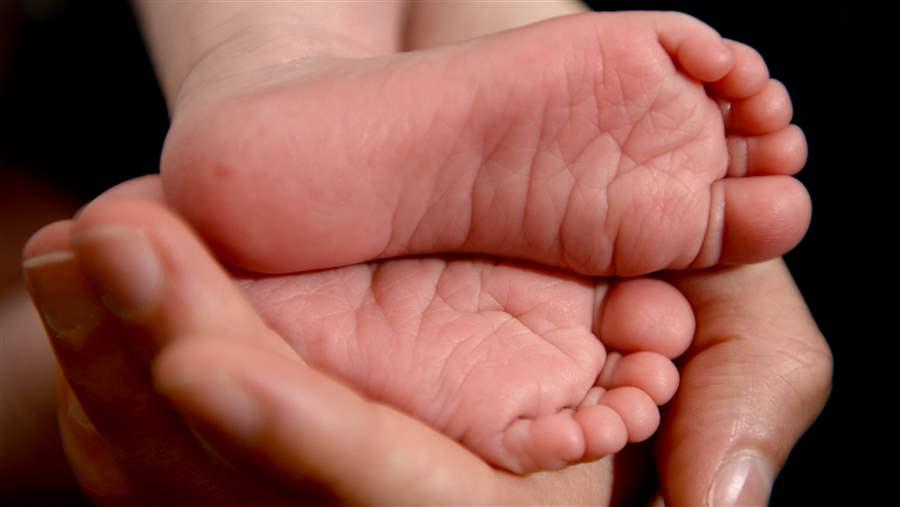
Feet© AP
A mother cradles her newborn baby’s feet. Some states are automatically creating children’s savings accounts for newborns to help families imagine and save for college. (AP)
Free money for college may sound like an easy sell, but when parents of newborns in Maine were offered a $500 grant for their infants’ college education, fewer than half signed up.
Even worse, a study found that less educated, lower-income families–those that could benefit most—were least likely to take the money. So last year, Maine changed its strategy. Today, each of the roughly 12,500 babies born in Maine each year receives a $500 grant deposited automatically in a college savings account.
For decades, private foundations have promoted the idea of children’s savings accounts to help families imagine and save for their children’s college education. Only recently has it taken root in states, which are targeting the youngest citizens.
The seed amounts tend to be small, but they can make a big difference, researchers say. Children who have even small savings accounts for college are seven times more likely to attend and graduate from college than those who have no savings accounts, reports William Elliott III, an associate professor at the University of Kansas, who has written extensively on children’s savings accounts.
College enrollment among low-income students has risen but significantly lags enrollment by middle- and high-income students. In 2012, about 51 percent of recent low-income high school graduates and equivalency holders were enrolled in college, while enrollment among middle- and high-income students had risen to nearly 65 percent and 81 percent, respectively, the Pew Research Center, citing federal statistics, reported last year. (Pew also funds Stateline).
Maine, which launched the nation’s first statewide universal children’s savings accounts in 2008, has the most generous program. And the College Challengeprogram’s $6.3 million annual budget is covered entirely by a private foundation.
Nevada and Rhode Island are trying versions of universal children’s savings accounts statewide, and Colorado plans to launch a pilot program for low-income preschoolers in November. None uses state funds. Children’s savings accounts are a new hybrid, bringing together state expertise with private foundations and corporate donors.
From 2008 to 2013, parents in Maine needed to enroll in the state’s tax-preferred 529 college savings plan to qualify for a $500 Harold Alfond College Challenge grant. Despite extensive marketing and outreach, only about 40 percent of babies were enrolled.
“We worked really hard and we were really amazed” that grants went untaken, said Bill Norbert, spokesman for the Finance Authority of Maine, known as FAME, a quasi-independent state agency that administers NextGen, the state’s 529 plan. 
Why was it so hard to sign up parents? “Life gets in the way,” Norbert said, adding that parents of a new baby are busy and the fear of paperwork kept them away – despite the state having simplified its forms and dropped its minimum deposit requirements.
The procedure now could not be easier. FAME gets monthly birth records from the state, then the foundation deposits a $500 grant for the newborn into a master account and notifies parents.
Instead of opting in, parents now can opt out, but few have. Parents are encouraged, but not required, to sign up as well for a separate 529 plan. Students can use the $500 grant, plus earnings, for higher education expenses at in-state and out-of-state colleges and vocational schools.
“We’re incredibly fortunate to have the Alfond Foundation,” said Martha Johnston, director of education for FAME. The foundation is named for the late Harold Alfond, a shoe manufacturer and philanthropist. “It’s a terrific gift for Maine,” she said.
A few states, including Oklahoma and Mississippi, have had limited pilot programs funded by private foundations. San Francisco and Cuyahoga County, Ohio, are among a handful of communities that have children’s savings programs.

Different from 529s

The new programs differ from regular 529 plans, which offer federal income tax breaks on earnings and withdrawals and state tax breaks in many states. With 529s, parents make financial contributions and choose how their money is invested. But parents do not direct children’s savings accounts.
Grants to savings accounts typically are held in the child’s name in a master account, which invests the funds and sends periodic statements to the child about the current value of his or her individual account. When the child enrolls in higher education, the grant and accrued earnings can be withdrawn for qualified educational expenses. Rules vary, but if the child does not enroll in higher education by a certain age, he or she forfeits the grant and earnings. 
In Nevada, the goal of the “College Kick Start” program is to create a “college-going culture” in a tourist-oriented state where education hasn’t been a priority. The stateranks 47th of the 50 states in high school graduation rates.
“You can go down to the Strip in Las Vegas and make $60,000 or $70,000 a year parking cars,” said Linda English, Nevada deputy treasurer.
College Kick Start provides every kindergartener in public school a $50 grant to start saving for college. Each child also gets a pink, plastic piggy bank and a blue T-shirt with “is going to college” on the front under an arrow pointing to the child’s face.
“We’re encouraging the families and the kids to set the expectation of college. It’s not an ‘if,’ it’s a ‘when,’” English said. Started as a pilot project in 2013 for 3,000 rural students in 13 counties, Nevada Kick Start went statewide last year for a three-year pilot. It has given 66,500 grants so far. Annual compound interest varies, but is expected to average 12 percent for a total of about $220 in 13 years when a student enters college, the Las Vegas Review-Journal reported. 
“It’s not going to be $20,000,” then-State Treasurer Kate Marshall said last year. “But what it is going to be is a way to start the conversation with that family, to tell that child that they’re college bound, and to help people think about and get in that door.”
Kick Start’s $1.8 million annual budget is paid through fees the state’s four private 529 plans pay the state treasurer’s office. In June 2016, the state’s 529 board will review the project and decide what’s next.
“One of the challenges we have with the board allocating $2 million a year is to ask them to wait 13 or 14 years” to show college enrollment has risen, English said.
Parents in Nevada are invited to start 529 accounts with their own deposits. Unlike the Kick Start grants, which are started with only a child’s name and school ID number, a 529 requires a Social Security number. That can be an obstacle for immigrant parents, English said.

Action in Other States

Since January, every baby born in Rhode Island automatically has received a $100 deposit in a college savings account. The deposits are funded by AllianceBernstein, a New York investment firm that operates the state’s 529 program. Rhode Island previously required parents to sign up for a 529 but, as in Maine, few did.
Reggie Bicha, director of the Colorado Department of Human Services, sees children’s savings accounts as part of his two-generation strategy to help families in poverty. Colorado aims to launch a three-year pilot savings program for low-income preschoolers in November and hopes to roll it out statewide later.
“Why I think it’s revolutionary—I remember parents I used to work with directly in child protection would tell me, `My kids will never go to college. Nobody in my family ever went to college. Don’t even talk to me about it,’” Bicha said.
With such an attitude, “how are they going to get the kids ready for kindergarten?” he said, let alone stay in school or think about college. But having a college savings account for your child can change one’s attitude, he said. “Parents will do for their kids what they won’t for themselves,” Bicha said.
Financial details are still being worked out, but over three years, Colorado plans to give 6,000 Head Start pupils $50 each in seed money for their savings accounts, said Keri Batchelder, the program coordinator.
Connecticut started CHET Baby Scholars last year. Tied to the Connecticut Higher Education Trust (CHET) 529 program, CHET Baby Scholars gives parents $100 if they open a 529 within a year of birth or adoption. If parents deposit $150 within four years, they earn a $150 match.
The Utah Educational Savings Plan, which runs the state’s 529 program, has developed a platform for children’s savings accounts and has worked with the I Have a Dream Foundation in New York and the El Monte Foundation in California on community-based children’s savings programs.
“We just want to help families save for college,” said Lynne Ward, the Utah plan’s executive director.  But Utah, which has the nation’s highest birth rate, has not started separate children’s savings accounts.
“In Utah we have more than 50,000 births a year,” Ward said, noting that the cost of providing just $50 each in seed money would exceed $2.5 million annually.
More states are expected to try children’s savings accounts in the next few years.
“Anything new just takes time,” said Mary Fairchild, senior fellow at the National Conference of State Legislatures. “If you had asked me eight years ago are we ready for children’s savings accounts, I’d have said no. Now, with all these innovations coming in, it looks very doable.”

Roots in the 1990s

Children’s savings accounts grew from the asset-building movement in the 1990s. Traditionally, government help for poor families has focused on food stamps and welfare, programs that alleviate immediate needs. Asset-building initiatives such as children’s savings accounts are designed to start children and families thinking and planning for the future.
In 1995, then-Democratic Sen. Bob Kerrey of Nebraska proposed KidSave, which would have opened an account for every American child at birth to be used to supplement Social Security after retirement. After that idea fell apart, then-Republican Sen. Rick Santorum of Pennsylvania and then-Democratic Sen. John Corzine of New Jersey proposed the ASPIRE act in 2004 to create restricted savings accounts for all newborns, seeded with $500 federal grants. In 2007, then-Democratic presidential candidate and New York Sen. Hillary Clinton proposed that the government give every newborn a $5,000 “baby bond” to be saved for college or buying a home.   
None of the ideas of publicly funded programs got off the ground.  
The Corporation for Enterprise Development, or CFED, a nonprofit advocacy group, launched a dozen demonstration projects around the country in the early 2000s.
The CFED initiative was intended from the start to be a time-limited initiative to develop, implement, and test children’s savings accounts.
But Andrea Levere, CFED president, says that early spadework by her group and others is finally beginning to pay off. “What happened, as often happens, is the projects unleashed innovation on the ground,” she said. 

Thursday, April 2, 2015

Business suits up for culture wars -- April 2, 2015 column

By MARSHA MERCER

For decades, social conservatives have blamed liberals, “the media” and Hollywood for promoting same-sex marriage and gay rights. Now they can add big business to the list.

The culture wars are back – they never went far -- and corporations are emerging as a powerful new player on behalf of  lesbian, gay, bisexual and transgender people.

“America’s business leaders recognized a long time ago that discrimination, in all its forms, is bad for business,” Apple CEO Tim Cook wrote Tuesday in an op-ed in The Washington Post.

Cook, who came out as gay last year, was among the chiefs of national and international companies as well as celebrities who criticized Indiana and its Republican governor, Mike Pence, for enacting a religious freedom law that critics saw as encouraging discrimination against the LGBT community.

Nothing focuses the mind of a state official like the threat of boycotts or trouble for local businesses, so Pence reacted when other states banned their employees from traveling to Indiana and companies and organizations threatened to cancel conventions. Angie’s List, a nationwide business-rating service, put on hold its plans for a $40 million expansion in Indianapolis.

Pence backed off the law he had previously signed, saying it needed a clarification or fix after all.

“Was I expecting this kind of backlash?” Pence said. “Heavens, no.”

Virginia Gov. Terry McAuliffe and Chicago Mayor Rahm Emanuel, both Democrats, quickly put out the welcome mat to businesses turned off by Indiana’s law. Virginia has a version of the religious freedom law but McAuliffe signed an executive order in 2014 with protections that Indiana lacks. It prohibits discrimination on the basis of race, gender, religion and sexual orientation.

McAuliffe invited Indiana businesses “to take advantage of Virginia’s open, inclusive and thriving business environment.”

When the Arkansas legislature passed a law similar to Indiana’s, Arkansas-based Wal-Mart joined other companies in asking Gov. Asa Hutchinson, a Republican, to veto the measure.  

The bill “threatens to undermine the spirit of inclusion present throughout the state of Arkansas and does not reflect the values we proudly uphold,” Wal-Mart CEO Doug McMillon tweeted.

Hutchinson refused to sign the bill he had supported, saying it too needed work. His son Seth had signed a petition asking him to veto it, Hutchinson said, noting generational differences in opinion.

About 80 percent of people 18 to 29 think gay marriage should be valid, a Gallup poll found last year. Support declines with age, and among people 65 and older, only 42 percent support gay marriage.

Three weeks before Pence signed Indiana’s religious freedom law, 379 employers filed a friend of the court brief March 5 in the U.S. Supreme Court supporting same-sex marriage.

The firms range from cupcake bakers and plumbers to Fortune 100 companies. Some are names that the youngest Americans grew up with: Amazon, Apple, Facebook, Microsoft, Starbucks and Twitter.

Others are traditional economic stalwarts: Aetna, Alcoa, Colgate-Palmolive, Dow Chemical, General Electric, Goldman Sachs, Marriott, Pfizer, Proctor & Gamble, United Air Lines, Verizon Communications, Wells Fargo and Xerox. And from the world of sports, the New England Patriots and Tampa Bay Rays.

The companies asked the court to affirm the rights of gay people to marry in all 50 states, but the brief did not cite social or civil rights reasons. Their legal argument was all about business and the burden the “fractured legal landscape” places on employers.

Currently, 13 states ban same-sex marriage and it is legal in 36 states and the District of Columbia. The legality of same-sex marriage is unclear in Alabama, where state and federal courts have issued conflicting orders.

Having such a patchwork of state laws “creates legal uncertainty and imposes unnecessary costs and administrative complexities on employers,” the brief said. Employers are forced to treat workers in similar circumstances differently simply because they live in different states. 

The court has scheduled oral arguments April 28 in Obergefell v. Hodges, which consolidates four same-sex marriage cases. A ruling is expected this summer.

“Allowing same-sex couples to marry improves employee morale and productivity, reduces uncertainty, and removes the wasteful administrative burdens,” the brief argues.

Everyone has a right to his or her religious beliefs, but business clearly believes the economic case for equal rights has been made. In today’s culture wars, social conservatives ignore that fact at their political peril.

© 2015 Marsha Mercer. All rights reserved.

Thursday, March 26, 2015

License plate as soapbox? --- March 26, 2015 column

By MARSHA MERCER
A civil rights activist in South Carolina had the most practical reaction I’ve seen about the controversy over Sons of Confederate Veterans’ specialty license plates.
The Rev. Joseph Darby, first vice president of the Charleston NAACP, said he is not opposed to plates with a Confederate battle flag because they identify people of whom he should be wary, reported Diane Knich of The Post and Courier newspaper.
“I don’t turn my back on that person because you never know,” Darby said.
South Carolina is one of nine states that produce Sons of Confederate Veterans’ license plates featuring the battle flag. Others are Alabama, Georgia, Louisiana, Maryland, Mississippi, North Carolina, Tennessee and Virginia.
The Supreme Court heard oral arguments Monday in Walker v. Texas Division, Sons of Confederate Veterans, a case involving Texas’ denial of the Sons’ specialty plate on grounds it “might be offensive to any member of the public.”
The Sons say the flag celebrates Southern heritage, but for many African Americans it is a potent symbol of oppression and racism. If someone chooses to exercise his right to free speech by paying extra for a license plate he knows others find offensive,  he is, as Darby suggests, giving the rest of us fair warning. You never know.
We’ve always judged motorists by their bumper strips and decals. Now state governments have discovered a dandy fund-raising machine that offers our vehicle as a means of self-expression. For a fee, each motorist can have a unique soapbox, the 6-inch by 12-inch rectangle of aluminum on our bumpers. 
Texas offers more than 400 specialty plates, touting enthusiasms, groups and causes, any number of which might be offensive to someone. But it has denied only a couple of applications.
The Lone Star State embraces its Confederate heritage with Confederate Heroes Day, an official state holiday on Jan. 19. Three permanent monuments to Confederate soldiers are on the state Capitol grounds. The Capitol gift shop sells Confederate battle flag posters, fake Confederate money and miniature Confederate flags. A nearby state office building is named for the postmaster general of the Confederate States of America.
But when the Sons applied for a plate with its logo, the Confederate battle flag surrounded by the words “Sons of Confederate Veterans 1896,” with a faint Confederate flag in the background, thousands of complaints poured into the board of motor vehicles, which rejected the request.
At issue for the Supreme Court is whether specialty plates are private speech protected by the First Amendment or government speech and subject to censorship. Texas argues that the government makes and owns the plates and has the right to restrict what they say. The Sons say the plates are private, protected speech.
More than speech issues are involved, though. License plates are big business. Texas raked in $17.6 million last year from specialty plates.
“They’re only doing this to get the money,” Chief Justice John Roberts said during oral arguments.
States typically pass some of the fee back to the nonprofit organizations. For example, Choose Life America raised more than $21 million from August 2000 through last October from specialty plate sales in 29 states and the District of Columbia, according to court documents.
The court has delayed consideration of a separate case from North Carolina, Berger v. American Civil Liberties Union of North Carolina. The state legislature approved the anti-abortion “Choose Life” specialty plate but then denied a request for one with the abortion-rights message, “Respect Choice.”
Texas argues that if it grants the Sons a specialty plate, it will have to allow plates from even the most offensive groups, such as al-Qaida. Roberts had an alternative solution.
“If you don’t want to have the al-Qaida license plate, don’t get into the business of allowing people to buy…the space to put on whatever they want to say,” the chief justice said.
The court is expected to rule in June. One solution, as Roberts suggests, is for states to stop selling license plates as a soapbox. That’s sensible, but states would hate to lose the easy revenue.
Most motorists, though, would be happy not to have to look at offensive license plates.
© 2015 Marsha Mercer. All rights reserved.

30

Thursday, March 19, 2015

`Ask the football team' won't end wasteful spending -- March 19, 2015 column

By MARSHA MERCER

In March 1975, Sen. William Proxmire, Democrat of Wisconsin, grabbed headlines when he bestowed his first Golden Fleece Award. His target: “wasteful, ridiculous or ironic use of taxpayers’ money.”

Sound familiar? Some things haven’t changed in 40 years; politicians are still fighting what they deem ludicrous federal spending, although few are as clever as Proxmire.

His first Fleece went to the National Science Foundation for spending $84,000 to study why people fall in love.

“Not even the National Science Foundation can argue that falling in love is a science,” Proxmire declared. Besides, he said, nobody really wants to know why people fall in love.

“I believe that 200 million other Americans want to leave some things in life a mystery, and right on top of the things we don’t want to know is why a man falls in love with a woman and vice versa,” he wrote, adding that such questions are best left to Elizabeth Barrett Browning and Irving Berlin.

A national debate erupted, with conservative Barry Goldwater and three Nobel laureates coming to the researchers’ defense. Columnist James Reston of The New York Times said that Proxmire, normally a sensible, modern man who believed in government’s ability to help solve problems, must have been kidding.  

“If the sociologists and psychologists can get even a suggestion of the answer to our pattern of romantic love, marriage, disillusion, divorce – and the children left behind – it could be the best investment of federal money since Mr. Jefferson made the Louisiana Purchase,” Reston wrote.

Reston identified a clash of two worthy goals that continues today: We want to eliminate stupid spending but we also want to support research that could help solve society’s problems.

Proxmire wasn’t kidding. His second Fleece in April 1975 took on a University of Michigan researcher who had received $500,000 from three federal agencies to study how and why rats, monkeys and humans clench their jaws.

The researcher sued Proxmire for libel. The Supreme Court found the senator was not immune from suit; he settled out of court for $10,000 and apologized to the researcher on the Senate floor. Proxmire’s legal fees, totaling more than $124,000, were paid by the Senate. The researcher paid his own legal bills.

Proxmire stopped naming researchers after that, but he fired off 166 more press releases announcing Golden Fleece Awards before he left the Senate in 1989.

Over the decades, members of both parties in Congress have crusaded against what they see as wasteful spending. Sen. Dan Coats, Republican of Indiana, last month started giving Waste of the Week awards, recycling items from the Wastebook that former Sen. Tom Coburn, Republican of Oklahoma, issued annually the last few years. Coburn retired last year.

Coats gave his Waste award March 11 to the National Institutes of Health for spending $387,000 on rabbit massage research at Ohio State University.  

“Does NIH need to fund a study to determine the benefits of massage by using 18 white rabbits from New Zealand that receive 30-minute massages four times a day?” Coats asked on the Senate floor. He quoted an official at Ohio State’s Sports Medical Center who said, “We tried to mimic Swedish massage because anecdotally it’s the most popular technique used by athletes.”

“Why didn’t they just ask the football team?” Coats said.

Actually, even though athletes often use massage, researchers say they don’t know the mechanism of how massage improves recovery after exercise and injury. That’s where the rabbits came in.

Ohio State defended its project as “important research designed to help address a key question: Is massage effective as a medical treatment?” The answer could help millions of people who suffer medical conditions that affect their muscles, the university maintained.

One thing is clear. As much as politicians love to make fun of research that sounds frivolous, they rarely act to stop wasteful spending. If they wanted to stop the appearance of grandstanding, they could rely on the annual recommendations of the nonpartisan Government Accountability Office to reduce overlap and duplication in federal programs as well as improper payments.

Congress and the executive branch implemented only 29 percent of GAO’s cost-saving recommendations over the last four years. The government-wide recommendations reach far beyond funny-sounding research projects.

To curb waste in government, members of Congress can dust off GAO’s reports and start implementing the recommendations. Ridicule may be entertaining but it won’t eliminate government waste.  

© 2015 Marsha Mercer. All rights reserved.

30

Thursday, March 12, 2015

Catching up on news you may have missed -- March 12, 2015 column

By MARSHA MERCER

You know about Hillary Clinton’s private emails and about the infamous letter signed by 47 Senate Republicans aimed at torpedoing an international deal on Iran’s nuclear program.

But did you know the federal government is about to make many of us envy a fourth grader?

That’s one of the lesser news items you may have missed the last few weeks as news outlets obsessed over weightier topics and scandals du jour.

Here are three recent developments that won’t change the fate of the world or even the 2016 presidential election but may – just may -- improve Americans’ quality of life:

1) About those fourth graders: Starting this fall, the federal government will give every fourth grader and their families a pass for free admission to all of America’s national parks and public lands for a full year.

“We want every fourth grader to have the experience of getting out and discovering America. We want them to see the outside of a classroom,” President Barack Obama said in Chicago last month when he announced his “Every Kid in a Park” initiative.

“Put down that smart phone for a second. Put away the video games. Breathe some fresh air,” the dad in chief counseled.  A 2010 Kaiser Family Foundation study found that young people devote an average of more than seven hours a day to electronic media use, or about 53 hours a week, he said. That’s more than a full time job.

Besides the addictive appeal of electronic devices, there are practical reasons why kids don’t spend more time in nature. About 80 percent of families live in urban areas where it’s not easy to spend time outdoors safely; many schools have dropped field trips to save money.

An annual pass to the nation’s parks and public lands usually costs $80, and children under 16 are always free. Giving kids themselves the passes, though, may help create a lifetime connection to nature. But first, they have to get there.

Needy families will receive transportation grants to visit parks, public lands and waters from the National Park Foundation, a charitable organization that supports the National Park Service.

Research has found that early exposure to nature and outdoor activities can influence attitudes in adulthood. Today’s young hiker may be tomorrow’s steward of the environment. Or not.

Young screen fanatics who spend most of their time indoors will grow up without any appreciation of nature. As adults, they won’t care less about preserving undeveloped nature.   

2) Which leads us to Secretary of Interior Sally Jewell and her announcement Thursday of a $5 million grant over four years from the American Express Foundation.

The goal: triple the number of volunteers in national parks and public lands to one million volunteers annually by 2017.

Interior is working to engage the next generation of ordinary citizens, mayors and state and federal officials in nature so everybody understands and wants to preserve green space.

“We need partners,” said Jewell, whose agency has responsibility for one in five acres in the United States. “We can’t do it alone.”

American Eagle Outfitters donated $1 million last year and began engaging other companies in the campaign.

“We won’t have advocates for open spaces if people don’t value them,” Jewell said.
Among her plans is to expand the 21st Century Conservation Service Corps, modeled on President Franklin D. Roosevelt’s Civilian Conservation Corps, which puts the unemployed and recent veterans to work.

3) Finally, a hopeful news alert: The cherry blossoms are coming.

Blossom experts (yes, they are) predict the peak will be April 11 to 14, a week or so later than usual because of the long, cold winter. But even in politically-fractured 
Washington, the blossoms are a sure sign that spring is around the corner. Somewhere.  

Dates for the Cherry Blossom Festival were set earlier. The festival is slated to run from March 20 to April 12, which means the blossoms once again may only partly coincide with the festivities.

For that miscalculation, you may blame Obama…Clinton…Republicans...but it’s all a stretch.

Speaking of stretching…put down that phone, step outside and breathe. We can’t all be fourth graders, but we all can get outside. And that’s not an inconsequential goal in the digital age. 

© 2015 Marsha Mercer. All rights considered.

30

Thursday, March 5, 2015

Congress fiddles while doc shortage looms -- March 5, 2015 column

By MARSHA MERCER

You’re not the only one getting older. Take a look at your doctor.

One in 10 active physicians is between the ages of 65 and 75 – retirement age. More than a quarter is 55 to 64 -- likely to retire within the decade.

The graying of our doctors and ourselves is part of the larger problem of access to health care. The goal of the Affordable Care Act, or Obamacare, is to help everyone get insurance. Then what?   

If you have health insurance through your employer or a public program such as Medicare, Medicaid or the Veterans Administration – as nearly 85 percent of us do -- access depends on when you can see your doctor. That can be days, weeks or even months.

Seeing a doctor likely will get only more difficult, unless Congress acts. And even that won’t solve the problem.

By 2025, the nation will be short 46,000 to 90,000 physicians overall, the Association of American Medical Colleges warned Tuesday in its latest study, “The Complexities of Physician Supply and Demand: Projections from 2013 to 2025.”

The study, which based its findings on demographic trends and changes in health care delivery and payment policies, projected a shortage of 12,000 to 31,000 primary care physicians and 28,000 to 63,000 specialists, notably surgeons of various types.

“The doctor shortage is real – it’s significant – and it’s particularly serious for the kind of medical care that our aging population is going to need,” said Dr. Darrell G. Kirch, the association’s president and CEO, in releasing the report. The association represents 158 medical schools, 400 teaching hospitals and 51 Veterans Administration medical centers.

The physician shortage showed up last summer at VA facilities with delays in care, Kirch told reporters. He noted that the over-65 population in the United States is projected to grow 46 percent by 2025.

Older, sicker people need more medical care, but physicians already say they’re overworked. In a survey last year, 81 percent described themselves as over-extended or at full capacity, and only 19 percent said they had time to see more patients.

Forty-four percent planned to cut back on patients seen, work part time, close their practices to new patients or retire, the 2014 Physicians Foundation nationwide survey found.

By the way, if you’re inclined to blame the influx of newly insured people through Obamacare, don’t. Even though an estimated 26 million people eventually will have insurance or other health care coverage through the law, those patients now are projected to increase the demand for physician services by only 2 percent or 16,000 to 17,000 doctors, the medical colleges’ report said.

Overall shortfall projections in the medical colleges’ study are smaller than those in 2010, when its study estimated a 130,600-physician shortfall. The lower shortfall numbers reflect such changes as more physicians completing their training and lower Census projections of the population, the new report said.

Medical groups want Congress to raise the cap on the number of medical residencies from about 29,000 a year to 32,000.That would cost about $1 billion every year through 2025, Dr. Janis M. Orlowski, chief health care officer of the medical colleges association, says. Medicare pays $40,000 of the $152,000 a year it costs to train a medical resident.

The cap was set “temporarily” in 1997; attempts to lift it have languished in Congress for years. Even if Congress does find $10 billion to boost the number of residents, though, other changes will be needed, experts agree.

An Institute of Medicine report last July said that the doc shortage is mostly geographical; many doctors train in New Jersey, New York and Massachusetts – and stay there to practice. Plus, a reallocation between primary care and specialist residency slots is needed.

A bright spot is the rapid growth in the number of advanced practice nurses and nurse practitioners and their increased role in delivering care. But, says the medical colleges’ report, “even in these scenarios, physician shortages are projected to persist.”

Here’s a problem Republicans and Democrats in Congress should tackle together – and soon. They’re not getting any younger either.

©2015 Marsha Mercer. All rights reserved.

30

Wednesday, February 25, 2015

Connecting is hard to do. No lie. -- Feb. 26, 2015 column

By MARSHA MERCER

Veterans Affairs Secretary Robert A. McDonald says that when he falsely told a homeless vet on L.A.’s skid row that he too had served in the Special Forces, he was trying to connect.

“What you try to do when you connect with someone is try to find common ground. And with veterans, my common ground is my veteran experience. So what I was trying to do is find a way to connect with that veteran,” McDonald told reporters Tuesday, apologizing for his mistake.

It happened last month when McDonald was taking part in the Greater Los Angeles Homeless Count. Looking for veterans who needed help, McDonald asked a homeless man if he was a vet. The man said yes, and McDonald asked where he served.

“Special Forces,” the man said.

“Special Forces? What years? I was in Special Forces,” McDonald replied, animatedly.

A CBS News crew with McDonald captured the exchange and broadcast it Jan. 30 as part of a news story on homeless vets. The Huffington Post first reported the discrepancy Monday, and other news organizations naturally joined in, often mentioning the embellished accounts of war experience by NBC’s Brian Williams and Fox News’s Bill O’Reilly.

Headlines trumpeted McDonald’s misstatement as a lie. That’s a heavy word, but these days we throw it around lightly. Everybody loves calling out lies and liars. Back in 2003, “Lies And the Lying Liars Who Tell Them” by Al Franken, now a U.S. senator from Minnesota, zoomed to the top of bestseller lists.

And yet, to say someone lied is more than a quick way of saying truth was not his constant companion. A lie is a deliberate attempt to deceive. When we say someone lies, we assume moral superiority. You and I misspeak, but They lie.

We need to hold onto the distinction between intentional deceit and a mistake in the moment. We should give the benefit of the doubt to someone who chooses words poorly once in conversation as opposed to someone who repeatedly makes calculated attempts to mislead.

Unfortunately for McDonald, who is trying to rebuild the credibility of the scandal-plagued VA, this was his second widely publicized falsehood this month. On NBC’s “Meet the Press” Feb. 15, he claimed that 900 VA employees had been fired since he took office, 60 for manipulating wait times for appointments. In both cases, actual number turned out to be far lower, fact checkers reported.

The Washington Post Fact Checker blog gave McDonald’s firing claims four Pinocchios, its highest rating for “whoppers.”

The VA conceded that McDonald’s numbers were incorrect, but he has not explained how he went on a national TV interview show with faulty statistics, and that’s troubling. Was it bad staff work or something worse?

He was unequivocal, though, about the Special Forces blurt.

“In an attempt to connect with that veteran and to make him feel comfortable, I incorrectly stated that I too had been in Special Forces,” he said. “That was wrong, and I have no excuse.”

A 1975 graduate of West Point, McDonald, according to his official biography, “completed Jungle, Arctic and Desert Warfare training and earned the Ranger tab,” which indicates he completed Army Ranger training. He served in the 82nd Airborne but not in Army Special Forces. He was chairman, president and CEO of The Procter& Gamble Co. from 2009 to 2013.
 
At a time when many veterans feel isolated and alienated, McDonald should be applauded for trying to break down the government’s wall of bureaucracy. In his first national news conference, he gave out his cell phone number so vets could call him directly.

But he’s right that there’s no excuse for his over-zealous attempt to connect. He has apologized to the White House, members of Congress and veterans.

With two strikes, McDonald insists he will do better to ensure that what he says is accurate. He must deliver on that promise.

Americans can have charity for a stupid mistake or two but they won’t put up with repeated efforts to mislead. No lie.

© 2015 Marsha Mercer. All rights reserved.
30