Thursday, November 10, 2016

Hillary Clinton's quest ends as it began, with Bill -- Nov. 10, 2016 column

By MARSHA MERCER

Hillary Clinton will never be just an asterisk of history.

She’s no Michael Dukakis or Walter Mondale, failed Democratic presidential nominees who fell to obscurity.  

And yet, one of the many ironies of the 2016 election is that Clinton’s marital status and gender may define her place in history – as former first lady and first woman presidential nominee of a major political party.

She won the popular vote, but because she did not win the White House, she will always be seen as the wife of a president. Because of the Electoral College, she will never have the chance to prove herself as president.

For all her subsequent accomplishments, marrying Bill Clinton was Hillary’s best career move, her ticket to the national stage.

As his wife, she became first lady of Arkansas and the first lady of the United States.

She, an ambitious Yale law graduate surely would have succeeded in life on her own, but we’ll never know if she would have become a U.S. senator, secretary of state and a presidential contender – twice – had she not first risen to prominence in the role of Mrs. In this way, the Hillary Clinton story is more 20th century than 21st.

The Clintons’ marriage, like most relationships, is unfathomable to those on the outside. When her husband was accused of womanizing during his bid for the 1992 Democratic presidential nomination, Hillary Clinton proved her loyalty by dutifully standing by her man -- even as she denied she was doing so.

She later showed her strength by enduring the public humiliation of his philandering in the White House.

So it seems a particularly cruel twist of fate that, after she built her own president-ready resume with Senate and State Department posts, her husband may be to blame for Donald Trump’s decision to enter the 2016 presidential race.

Strange as it now seems, both Clintons formerly were friends with Trump, who donated to the Clinton Foundation and played golf with Bill.

Bill Clinton called his pal Trump in May 2015 and encouraged him to play a larger role in Republican politics, The Washington Post reported.

What exactly was said in the private phone conversation isn’t known. A few weeks later, Trump glided down the escalator at Trump Tower and began knocking off GOP presidential contenders, one by one.

And so, Hillary Clinton who in 2008 lost to a Democratic outsider promising change, lost Tuesday to a Republican outsider promising change.  

As the 2016 campaign tightened at the end, Clinton relied more and more on President Obama and his popular wife, Michelle, to make the case for her. Days before the election, the president conversationally asked men about their resistance to a woman president.

“I just want to say to the guys out there . . . there’s a reason why we haven’t had a woman president before . . . I want every man out there who’s voting to kind of look inside yourself and ask yourself, if you’re having problems with this stuff, how much of it is that we’re just not used to it?” Obama said at a Clinton rally in Columbus, Ohio.

“So that, like, when a guy is ambitious and out in the public arena and working hard, well, that’s OK. But when a woman suddenly does it, suddenly you’re all like, well, why is she doing that?” he said.

Obama was onto something. Trump won white males’ votes 63 percent to Clinton’s 31 percent, exit polls found.

But Trump also won the votes of white women 53 percent to Clinton’s 43 percent.
When Tim Kaine, Clinton’s running mate, introduced her at her concession speech Wednesday, he said: “She has made history. In a nation that is good at so many things, but that has made it uniquely difficult for women to be elected to federal office, she became the first major party nominee as a woman to be president and last night won the popular vote of Americans for the president.”

Minutes later, Clinton, with her husband standing behind her, said:  

“I know we have still not shattered that highest and hardest glass ceiling, but some day someone will, and hopefully sooner than we might think right now.”

Yes, but that woman will not be Hillary Clinton.  

(c) 2016 Marsha Mercer. All rights reserved.

30

Thursday, November 3, 2016

A gracious loser? We can hope -- Nov 3, 2016 column

By MARSHA MERCER

A ritual of American politics will unfold Tuesday night.

Both Hillary Clinton and Donald Trump will hold victory parties but, before the night is over, one will concede defeat. If we’re lucky.

We can take nothing for granted. To the end, Trump remains a question mark. In his last debate with Clinton, he refused to say whether he would accept the results of the election.

“I will keep you in suspense,” he said. It was outrageous, provocative and pure Trump. He still appears likely to come up short in the Electoral College, although polls have tightened in the last week.

One thing is certain, though. The American people have suffered enough disappointment during this dispiriting campaign. Barring an election disaster, the loser needs to accept the will of the voters with grace and urge his or her followers to do the same.

The winner also must move immediately to begin repairing the breach that has riven the country.

This presidential contest has always been more about the candidates’ deficiencies than their policies. When the votes are finally counted, it’s time for all of us to put the country first.

Our admirable American tradition holds that defeated presidential candidates rise to the occasion for the sake of the greater good. It’s reassuring to see failed candidates muster grace – and even humor -- at a time of personal misery.

In 1908, after his third failed campaign for the White House, Democratic nominee William Jennings Bryan said: “I am reminded of the drunk who, when he had been thrown down the stairs of the club for the third time, gathered himself up, and said, `I am on to those people. They don’t want me in there,’” William Safire wrote in “Safire’s New Political Dictionary.”

Going into the 1948 election, Thomas Dewey was confident he’d beat Harry Truman – as were some newspaper editors. We’ve all seen the screaming banner headline in the Chicago Daily Tribune, “DEWEY DEFEATS TRUMAN.”

All night the votes came in. When Dewey awoke the next morning to learn he’d lost, he sent a gracious telegram to Truman.

“My heartiest congratulations to you on your election and every good wish for a successful administration. I urge all Americans to unite behind you in support of every effort to keep our nation strong and free and establish peace in the world,” he wrote.

Asked by reporters what had happened, Dewey replied, “I was just as surprised as you are . . . It has been grand fun, boys and girls. I enjoyed it immensely.”

Four years later, when he lost to Dwight Eisenhower, Democrat Adlai Stevenson said he was reminded of the story about Abraham Lincoln after an election defeat. Lincoln said he felt like the boy who stubbed his foot in the dark -- “too old to cry, but it hurt too much to laugh.”

After the bitter 1960 presidential campaign, Richard Nixon offered a quasi-concession statement to John F. Kennedy.

“If the present trend continues, Mister Kennedy, Senator Kennedy, will be the next president of the United States,” Nixon told his supporters in California about midnight Pacific time. 

“I want Senator Kennedy to know . . . that certainly if this trend does continue, and he does become our next president, that he will have my wholehearted support and yours too,” Nixon said.

Nixon was convinced voter fraud cost him the election but he did not demand a recount despite JFK’s razor-thin margin of victory -- just over 100,000 votes out of 68 million votes cast. 

Kennedy won 303 electoral votes and Nixon 219. Fifteen unpledged electors in Alabama, Mississippi and Oklahoma voted for segregationist Sen. Harry Byrd of Virginia.

To preserve his viability for future elections, Nixon would not look like a sore loser.

Nobody ever warms to defeat. Mitt Romney was so sure he was going to win four years ago that he’d written only a victory speech.

“It’s about 1,118 words long,” he told reporters traveling with him on Election Day. His staff hadn’t written a concession speech either.

A few hours later, Romney called President Barack Obama to congratulate him. Then Romney went to what was supposed to be his victory party.

After wishing the president and his family well, Romney told supporters, “This is a time of great challenges for America and I pray that the president will be successful in guiding our nation.”

We can dream that whoever loses on Tuesday is as classy.

(c) 2016 Marsha Mercer. All rights reserved.
30



Thursday, October 27, 2016

Ballot selfies -- fun, but . . . -- Oct. 27, 2016 column

By MARSHA MERCER

You may have heard -- how could you not? -- that pop star Justin Timberlake snapped a ballot selfie while voting in Tennessee on Monday and posted it online.  

“Hey! You! Yeah, You! I just flew from LA to Memphis to #rock the vote!!! No excuses, my good people! There could be early voting in your town too,” Timberlake, 35, wrote to his 37 million Instagram followers. That’s right – 37 million.

Timberlake’s selfie didn’t show how he voted, but He’s with Her. He was host of a fundraiser for Hillary Clinton in August.

He rocked the vote all right. His selfie was seen ‘round the world, because it could have landed him in jail. In Tennessee, it’s against state law to use a mobile device to take photos or videos in a polling place.

Fortunately, the sensible district attorney in Memphis issued a statement saying: “No one in our office is currently investigating this matter nor will we be using our limited resources to do to so.”

In the universe of potential problems at the polling places, ballot selfies are minor irritants, indeed. They’re innocuous and fun, the latest manifestation of the urge to share all on social media, and they encourage people to get out and vote. What could go wrong?

More than you might think.

We didn’t always have a secret ballot and, until the late 1880s and early 1890s, American elections were rife with corruption.

Party bosses and local officials provided ballots with only some candidates’ names, “helped” voters mark their ballots and gave voters a corn kernel or button, proving they voted “right.” The voter could exchange the token later for money.

As states adopted the secret, or Australian ballot, named for where it originated, in the late 19th century there was less opportunity for vote buying and coercion. You could say how you voted, but no one knew for sure.

To continue ensuring a secret ballot in the 21st century, some states have passed laws banning ballot selfies.

It’s illegal in 16 states to take pictures of ballots at polling places, legal to do so in 21 states and the District of Columbia, and legally unclear in the rest, the Associated Press reported. The situation in the states is fluid, however.

In Virginia, for example, it was illegal in previous elections to take pictures of one’s ballot but will be OK this time, Virginia Attorney General Mark R. Herring said last month. You can also use your phone to look up information, but not to call someone.

In much of the Deep South, including Alabama and North Carolina, it’s illegal to take pictures of ballots or in polling places. Texas and California are among states where it’s unclear, according to AP.

The American Civil Liberties Union and other free speech advocates have fought state laws prohibiting ballot selfies with some success. A federal appeals court ruled in August that New Hampshire’s ban on ballot selfies unconstitutionally limited the right of free speech.

A federal district court granted a preliminary injunction Oct. 24 against Michigan’s ban on selfies, so voters can snap away Nov. 8. With so many different laws, the issue likely will be decided by the U.S. Supreme Court.

But critics like law professor Rick Hasen of the University of California-Irvine,  author of the Election Law Blog, warn that ballot selfies could bring a return of buying and selling votes and of coercion from employers, unions and others.

While vote-buying cases do pop up from time to time, no corroborating evidence of vote buying or voter coercion from the 20th or 21st centuries was presented in the New Hampshire case, the appellate court said.

Quoting from a 1957 U.S. Supreme Court opinion by Justice Felix Frankfurter, the appeals court wrote that prohibiting ballot selfies was like “burn(ing) the house to roast the pig.”

Technology undeniably has changed how we communicate, and we must protect our right to self-expression. But nobody wants to make it easier for someone to intimidate, coerce or buy voters.

It’s dismaying that the ubiquitous selfie might turn back the clock and undermine our shaky confidence in honest elections. Too many people are already trying to do that. 

©2016 Marsha Mercer. All rights reserved.

30
Thursday, October 20, 2016

Ins and outs of getting paid as a family caregiver -- on AARP.org

http://bit.ly/2epDHRK

You Can Get Paid as a Family Caregiver

Medicaid is making it easier for families to afford caring for a loved one at home

You Can Get Paid as a Family Caregiver
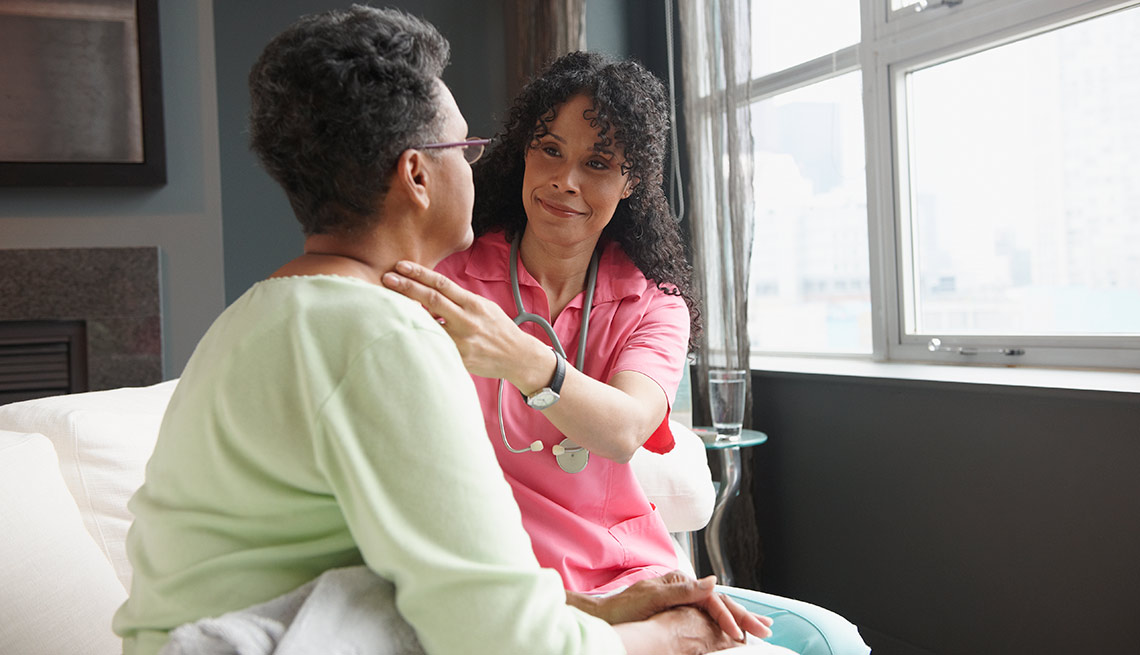
Exploring the maze of public and private options to help you get paid for caregiving. — Getty Images
Getting paid as a family caregiver seems about as likely as winning the lottery. Just ask the nation's 40 million family caregivers — spouses, adult children and other relatives — 34 million of whom provide unpaid care to someone 50 or older.
Medicare does not pay family caregivers, who traditionally have assumed these duties without pay.
But with older adults living and needing care longer and wanting to stay in their own homes, attitudes and public policies about family caregiving are slowly changing.
Thanks to innovations in Medicaid and the Department of Veterans Affairs, older adults and people with disabilities are designing their own in-home care programs and hiring family members (and, in rare cases, spouses). There's still a long way to go, though.
"These programs are so small. They're not picking up enough people," says Gail Gibson Hunt, president of the National Alliance for Caregiving.
With those caveats in mind, here are some ways family caregivers can be compensated.

Medicaid

If your loved one is eligible for Medicaid, check to see if your state has a participant-directed services program. These Medicaid programs are aimed at keeping people of all ages and disabilities independent and in their own homes.
Typically, the participant, working with a caseworker, draws up a care plan and hires a worker of choice, who can be a family member (though in many states not a spouse) to help with such activities as bathing, preparing meals or feeding.
Started as pilot projects called Cash & Counseling in the 1990s, consumer-directed programs expanded under the Affordable Care Act. Currently about 1 million people participate in self-directed Medicaid plans. The Centers for Medicare & Medicaid Services (CMS) provide financial incentives to states — as much as 6 percent of the cost — to offer the self-directed option.
"The federal government has been extremely supportive of self-direction," granting waivers for states to develop programs, said Suzanne Crisp, a senior adviser for PPL Consulting and former director of program design and implementation at the National Resources Center for Participant-Directed Services at Boston College.
Under self-directed plans, the participant (or a surrogate in cases of mental impairment) can have an overall budget for goods and services based on an assessment of needs. The participant negotiates the caregiver's rate of pay at or above the state minimum wage.
A financial management services firm typically performs such employer duties as collecting time sheets and issuing paychecks, filing taxes, workers' compensation and other insurance.
Programs go by different names and operate differently in each state (if they have them).
Through California's In-Home Supportive Services (IHSS) program, run by Medi-Cal, California's Medicaid, 500,000 seniors, blind or people with disabilities pay friends, family members and in some instances, spouses, for help with housework, meal preparation and personal care.
Training materials warn, "It can be tricky to be the paid IHSS care provider to a relative or close friend," noting that the caregiver is an employee in a program with a lot of rules.
Check with your local Area Agency on Aging for more information.

Veterans

The Department of Veterans Affairs has several programs that pay family caregivers under certain circumstances.
Veteran-Directed Home and Community Based Services gives veterans of all ages who otherwise would be in nursing homes the ability to tailor their long-term care at home, including hiring family members or friends as caregivers.
To qualify, a veteran must need assistance with at least three activities of daily living or have a significant cognitive impairment, and be enrolled in the VA for health care. There's no income limit, but higher-income vets are subject to a copayment.
"The veteran is the employer," said Daniel Schoeps, the VA's director of purchased long-term services and support. "It's up to the veteran how much they pay the workers" — although the guideline is $20 an hour maximum.
The veteran has a monthly budget based on physical condition that ranges from $1,200 to $4,000. The average is $2,000 a month. The vet doesn't receive a check; the state or the aging office handles payments to the caregiver, employee taxes, and fees for counseling and financial management services.
The veteran-directed program started in 2009 and is available through 61 VA medical centers in 35 states. About 1,900 veterans participate, a fraction of the 50,000 veterans who receive home health care on any given day. The VA hopes to have the program operating in all 150 medical centers within three years.
The VA offers home caregivers of veterans who were severely injured or suffered mental health issues since 9/11 special benefits through Comprehensive Assistance for Family Caregivers, a congressionally mandated program. The caregiver may be a spouse, family member or friend.
"Just because we're talking about post-9/11 veterans doesn't mean we're talking about 21- and 22-year-olds," said Meg Kabat, national director of the VA's Caregiver Support program. Many who were injured in the early 2000s had already been in the service many years.
About 34 percent of the caregivers in the comprehensive assistance program are 41 to 64, and 15 percent are 50 or older. Participants receive a stipend, travel expenses, health insurance and not less than 30 days a year respite care.
"They're paid a financial stipend that represents the sacrifices they make in taking care of the veteran," Kabat said. The payment ranges from $600 a month to $2,300 a month, depending on geographical area and the extent of the disability.
The payment is not taxed, and the caregiver does not earn work credits toward Social Security and Medicare. That can be an issue for younger spouses.
About 24,000 caregivers participated in fiscal 2015. About 300 to 400 new caregivers join the program each month, and several hundred a month leave it because veterans improve through rehab and other services.
A veteran who qualifies for the needs-based VA pension and has served one day in wartime, or a surviving spouse, may be eligible for Aid & Attendance. The vet may pay a family member, though not a spouse, for help with activities of daily living, such as bathing, eating and dressing.
Housebound is a separate program that allows VA pension-eligible veterans who need help ambulating outside the home to pay a family caregiver. In both Aid & Attendance and Housebound, the caregiver must report the income to the IRS.
Peer support group, face-to-face classes and online training are available to anyone caring for a veteran or to veterans caring for nonveterans. Learn more at caregiver.va.gov.

Your family member pays you

If your loved one can afford to pay you directly for home care, congratulations. You're an employee, and you'll need to pay federal, state and local taxes.
"If you're paid under the table, you're in violation of the law," warned Hyman G. Darling, an attorney in Springfield, Mass., and president-elect of the National Academy of Elder Law Attorneys.
As for accepting payment as a "gift," Darling says, don't. "People do it all the time, but it's not right. If someone makes a gift in return for services, it's no longer a gift. It's taxable to the recipient."
He suggests the caregiver consider training as a home health aide by an agency and then working directly for the agency, which will file the necessary paperwork. In some cases, the agency may be able to bill Medicaid or Medicare, he said. Check with your local Area Agency on Aging.
If your loved one planned ahead and has long-term care insurance, some hybrid policies allow payments to family caregivers.
It may seem odd, but if you become a family caregiver paid by the family member, sign a contract. It should specify the services being performed and the payment amount, Darling said.
The documentation will come in handy if the loved one later needs to qualify for Medicaid. Under the "look-back" provision, Medicaid will examine five years of records and could say the payments were a gift, Darling said. "If you're continuing to pay someone and not reporting the payments as taxable income, each payment extends the five-year period." And that could jeopardize your loved one from being qualified for Medicaid.
Marsha Mercer is a Washington, D.C.-based journalist
.

Write-in for president? Not so fast -- Oct. 20, 2016 column

By MARSHA MERCER

You say you can’t stand voting for the presidential candidates on the ballot, so you’re going to write in Mickey Mouse, your own name -- or mine? Don’t. Really.  

Yes, several prominent Republicans say they will write in GOP vice presidential nominee Mike Pence for president because they can’t abide Donald Trump. They include Sens. Kelly Ayotte of New Hampshire, Cory Gardner of Colorado and Rob Portman of Ohio.

Sen. John McCain of Arizona said he might write in the name of his buddy Sen. Lindsey Graham, Republican of South Carolina.

The urge to protest the presidential choice is strong, but a write-in could be wrong. You might as well tear your ballot into tiny pieces and swallow them as write in someone’s name, even Pence or Bernie Sanders -- unless you do your homework.

Sen. Lisa Murkowski, Republican of Alaska, won a write-in campaign for re-election in 2010 after losing the GOP primary, but no write-in presidential candidate has ever won a single state.

Votes for a third party or write-in candidate could tip close states to one candidate or the other, however. Hillary Clinton finally called on Al Gore to make the point.

“Your vote really, really, really counts. A lot. You can consider me as an Exhibit A of that truth,” Gore said at a Clinton rally in Miami Oct. 11.

In the 2000 presidential election, Gore came within a whisker of winning Florida’s popular vote and the White House. Many Democrats still blame Ralph Nader for Gore’s loss.

It’s worth reviewing this bit of ancient history. In the official Florida tally, George W. Bush beat Gore by 537 votes – and Nader got 97,488 votes.

Nader was on the ballot as the Green Party presidential candidate, so his votes counted. Each state sets its own election rules, though, and many states are unfriendly to write-ins.

In 34 states, including Virginia, write-in presidential candidates must file papers with the state before the election. Otherwise their votes don’t count.

A write-in presidential candidate in Virginia needs to submit to the state a list of 13 electors at least 10 days before Election Day. Alabama does not require advanced paperwork, but Tennessee does.

In Florida, write-in presidential candidates must file an oath with the state in order to have a blank space provided for their names to be written in on the general election ballot.

A write-in presidential candidate in Florida must file the form and a list of electors “at any time after the 57th day, but before noon of the 49th day, prior to the date of the primary election in the year in which a presidential election is held,” according to Florida law.

Got that?

Only seven states allow voters to write in whomever they please for president, and nine states don’t allow presidential write-in votes at all.

Presidential candidates also must file with the Federal Election Commission. So far, more than 1,800 individuals have filed paperwork as presidential candidates with the FEC.

Clinton, Trump and Libertarian Gary Johnson are on ballots in all 50 states and the District of Columbia. Green Party candidate Jill Stein is on the ballot in 44 states and D.C., and she has qualified as a write-in in three other states. 

Independent Laurence Kotlikoff, an economics professor at Boston University, insists he has a shot largely as a write-in candidate at the 270 electoral votes necessary to win the White House.

On the ballot in only two states, Kotlikoff says by Election Day he will be registered as a write-in in all but one of the states that require certification.  

Independent Evan McMullin, a conservative who made news when a poll in usually red-state Utah put him in a tight race with Trump and Clinton, told NPR Sunday he is on the ballot in 11 states and will be on the ballot or certified as a write-in in 43 to 45 states by Election Day.

It’s totally understandable that voters appalled by Clinton and Trump would want to protest by writing in someone else’s name. The smart thing to do first: Check with your local election office whether a write-in vote for president will be tallied.

Make sure “your vote really, really, really counts.”

©2016 Marsha Mercer. All rights reserved.

30

Thursday, October 13, 2016

Be careful what you wish for, `Mr. Brexit' -- Oct. 13, 2016 column

By MARSHA MERCER

“She accused me of being an American!” the man from Ottawa said in mock horror.

It was early evening in a candlelit church in London and we were waiting for a classical music concert. I’d mistaken his Canadian accent for ours. Oh for the days when Canadians abroad conspicuously wore red maple leaf lapel pins.      

Exchanging pleasantries, we talked about where we were from, how long we’d be on vacation, what we’d seen, the unusually fine weather. Then, out of the blue, he said:

“I guess you’re glad to be away from the politics.”

Well, yes, absolutely. For nearly two weeks, I visited old friends, played tourist, avoided TV news and did not check Facebook or email for the latest indignities from the campaign trail.

I loved riding shotgun on the left as my friends drove us around beautiful Devon on country lanes so narrow that when cars meet, one has to back up. The motorist who finally moves forward waves in thanks. It’s a friendly, civilized and slow way to travel. 

There’s nothing like walking around Grimspound, prehistoric ruins of 24 stone round houses inside a stone wall dating to the Late Bronze Age, 1450 to 700 B.C., in Dartmoor National Park, to put America’s political screeching into perspective. The ugly presidential campaign could and would go on without me.

My hosts in Britain warned that people there would give me grief about Donald Trump, but that didn’t happen. The common reaction upon learning I was from Washington was pity.

People elsewhere treat Americans the way you would an acquaintance who’s gotten a bad medical diagnosis: gently concerned, sympathetic and not quite sure what to say. 

Even British pop music queen Adele told an audience in Washington the other night she’s embarrassed for Americans because of our election.

We don’t much like being pitied by people whose economy is suffering because they voted to “Make Britain Great Again” by leaving the European Union -- but it’s hard to say so until we see how Nov. 8 turns out.

How, the owner of our B&B in London asked, shaking his head sadly, had the American election come to a choice between two people as unpopular as Hillary Clinton and Trump? Naturally, like everyone else, he had a theory.

Trump never expected to get this far in his campaign. Running for president was just a way for the bored billionaire to boost his brand. As for Clinton, she’s been around too long and people are tired of her, the man said.

“Your people want change – just like here,” he said.

Be careful what you wish for, I thought.

The vote to leave the EU stemmed from the same kind of discontent that fueled Trump’s rise – a sense of loss of control and identity, a distrust of globalism and a desire to take the country back to some imaginary glory days.

Britons are just beginning to feel the bad effects of Brexit. The pound has dropped against the dollar to levels not seen since the1980s. A leaked U.K. Treasury report predicted a post-Brexit drop in the country’s Gross Domestic Product of perhaps 9.5 percent per year and tax revenue losses reaching 66 billion pounds per year.    

Trump calls himself “Mr. Brexit” and claims he will surprise everyone by winning on Election Day.

“This is like Brexit, folks,” Trump said in Pennsylvania the other day. “We want our independence back. We want our borders strong. We don’t want people coming in from Syria that we have no idea who the hell they are.”

Polls in Britain were close before the June vote, but it was thought Britain would remain in the EU. Almost three-quarters of eligible voters turned out, and 52 percent voted to leave and 48 percent to remain.

Clinton’s lead on Trump has widened nationally and in key swing states, polls show. Some analysts are calling the race over. It’s not. Polls usually tighten in the waning days of presidential campaigns. Plus the “unshackled” Trump is attacking Clinton in hopes of suppressing her vote.

As for me, I’d rather visit Britain than visit Brexit-like punishment on the United States. How about you?

©2016 Marsha Mercer. All rights reserved.

30

Wednesday, October 12, 2016

You can afford a home-care worker -- AARP.com

http://bit.ly/2e1v12J

You Can Afford a Home-Care Worker

There are resources for families who need caregiving help

You Can Afford a Home-Care Worker
Need home health care? We have resources to help defray the costs. — Getty Images
Planning for in-home care is a lot like the Chinese adage about planting a tree: The best time was 20 years ago, and second best is today.
Older Americans determined to stay in their own homes are likely to need help at some point — for a few hours a day or 24/7 — with personal care, household chores and nursing services.
"There's advanced planning, and there's crisis planning," says Hyman G. Darling, an estate attorney in Springfield, Mass., and president-elect of the National Academy of Elder Law Attorneys.
Those who plan ahead often buy long-term care insurance policies with home care benefits if they can afford them and qualify for them. Those without it often start out relying on an unpaid family caregiver.
"It's tough," Darling says.
About 1 in 3 people caring for someone at home (as opposed to a nursing home), said they had hired paid help in the past year, according to a 2015 survey by the AARP Public Policy Institute and National Alliance for Caregiving.
The median cost nationwide for either homemaker or home health aide services is upward of $125 a day, assuming 44 hours of care per week. The median cost for assisted living is comparable to 44 hours of home care a week (though far less than a nursing home), according to the Genworth 2016 Cost of Care Study. Costs vary by region, number of hours and level of care needed.

Here are tips for how you can afford home care, whether you're planning ahead or need help soon:

If you can plan ahead

If you're in your 50s, hooray! You're in your prime for advance planning to hire a home care worker when the time comes. You can invest, check out long-term care and life insurance policies with in-home care benefits — perhaps through an employer — and other products to cushion the high costs of home care.
"It's important for a person to purchase these policies when they're in good health and younger," says Rod Perkins, vice president of insurance regulation with the American Council of Life Insurers. "You don't want to wait until you need it."
The average age for purchasing long-term care insurance used to be in the 60s but has dropped to 57, Perkins said.
"Baby boomers have seen their parents have long-term care needs and weren't prepared," he says. "And it's not just an old-age product. You could need in-home care as a result of an accident."
Policies may include an elimination or waiting period before long-term benefits start, but it's wise to think of policies in the long run. The average claimant on a long-term care policy is 80+. Since you may pay premiums for decades, take time to compare policies and get the benefits you think you'll need and can afford in the long term.
Policies are changing to meet current demands, such as long-term care insurance benefits attached to life insurance policies.
"In the past, most long-term care policies were nursing-home only," Perkins says. But today, most long-term care policies are comprehensive and cover care in a variety of settings.
Download the free "A Shopper's Guide to Long-Term Care Insurance," by the National Association of Insurance Commissioners, the organization of state insurance regulators. Note: Do your homework to figure out if long-term care insurance is right for you. Some people, such as those with a pre-existing condition, are not able to afford or qualify for long-term care insurance.
If you need help now
If you're older and need help paying for in-home care sooner rather than later, you can search for services by location on the federal site eldercare.gov. See also benefits.gov and the National Council on Aging's BenefitsCheckup.org to find out what programs you qualify for.
You can also search for services by location using the Eldercare Locator on eldercare.gov.
Homemaker services cover help with such tasks as eating and bathing, cooking and cleaning, and running errands. Home health aides provide a range of nonskilled or skilled medical services, from checking vital signs to nutrition therapy and wound care.
Medicare pays for medically necessary home health care on a limited basis but not for homemaker services. Medicare supplemental plans and health insurance through an employer generally do not cover home care.
Medicaid, the joint federal-state program for low-income people (or in some cases those with high costs), does pay for in-home care, some residential and assisted living care, and nursing home care. Each state runs its programs differently, however, and eligibility and benefits vary.
Eligible veterans may qualify for several Department of Veterans Affairs programs — Aid and Attendance, Housebound, Home and Community Based services — that help pay for care at home.
One little-known option: Program of All-Inclusive Care for the Elderly (PACE), a small but growing Medicare and Medicaid program aimed at keeping frail seniors out of nursing homes. It covers in-home care, checkups, dental and doctor care, hospital and nursing home stays, prescriptions and some transportation.
To be eligible, someone must be 55 or older, be certified by the state as in need of nursing home-level care (as certified by your state) and live in an area with a PACE organization. People with Medicare or Medicaid, or both, can qualify; some may be charged a monthly premium. Those not covered by Medicare or Medicaid can pay privately.
Although PACE has been around for decades, only about 40,000 people were enrolled as of Jan. 1, 2016. More than 110 organizations offered PACE programs in 32 states as of March.
Individual or group life insurance policies may have cash value the owner can use toward qualified home care expenses. With an accelerated death benefit, the company pays actual charges for long-term care up to a certain amount per day or month. It's typically capped at 50 percent of the death benefit.
A reverse mortgage could provide cash for home care, but the homeowner remains responsible for taxes, upkeep and other bills. Experts warn that you could run out of equity in your house and still need care. It's important to research reverse mortgages to see if they are right for you and take advantage of revere mortgage counseling.
"For the most part, the clients who have home care are private pay," says CPA Jerry Love, of Abilene, Texas, a frequent lecturer on financing retirement and long-term care for the American Institute of Certified Public Accountants.
People cobble together a budget from savings, long-term care and life insurance and annuities, reverse mortgages or home equity loans.
It may be cheaper to hire a worker directly, rather than through an agency, but being an employer comes with responsibilities, Love warns.
"First you have to be sure you're paying the minimum wage," he says. "And if the person is working more than 40 hours a week, you must pay overtime."
Covered are workers who are family and friends, those paid privately or with Medicaid funds or some other combination.
If you're hiring and paying for home care for medical reasons or because the recipient is in the early stages of Alzheimer's or dementia, you may qualify for federal tax deduction, just as if the loved one were in a nursing home, Love says. An adult child may get a tax break if the parent can be claimed as a dependent. (The adult child must meet certain criteria, including that the family caregiver must be providing over half of the care recipient's financial report.)
Guided Imagery: The Beach - AARP
Whenever you have a few minutes, wherever you are, be transported you to a peaceful place where you feel relaxed and calm.

Private payers should also look into community support

"Tap into anything in the community you can apply for," Love says. Don't overlook churches, synagogues, the United Way, the local Area Agency on Aging office and senior centers.
They may steer you to adult day care, meal delivery programs, and grants for home modification, weatherization and assistance with heating bills. Such assistance may be enough for you or your loved one to remain independent and at home.
If you're the family caregiver, you may be eligible for a voucher to pay a neighbor or friend to help out.
Respite care vouchers are funded by the federal government as well as by private organizations, such as Easter Seals, the Alzheimer's Association and the ALS Association.
In Virginia, for example, a family caregiver who lives with the care recipient may apply for a federal respite grant voucher of up to $400 through the Virginia Division for the Aging. About 200 families a year, many of whom do not receive Medicaid, receive the grants.
"It's a chance for the caregiver to take a break and rejuvenate," says Liz Havenner, Division of Aging human services program director. "They may just want to take a nap."